
Latest posts
-
Squeeze Bottle Material | PET vs HDPE for Sauces and Oils

Squeeze Bottle Material | PET vs HDPE for Sauces and Oils Introduction When sourcing squeeze bottles for condiments, sauces, edible oils, and animal grease, brand owners and food manufacturers always face one core question: PET or HDPE? These two are the most common food-grade plastic materials for squeeze packaging, but their physical properties, chemical resistance,…
-
Which PET Preform Matches Which Bottle? Complete Selection Guide

Which PET Preform Matches Which Bottle? Selection Guide Which PET Preform Matches Which Bottle? Preform Weight, Neck & Bottle Size Guide Many new blow‑molding plant owners and packaging buyers ask the same question: Which PET preform do I need for my target bottle? It is not as simple as “one preform for one bottle”. One…
-
Can Different Gram PET Preforms Make The Same Volume Bottles?

Can Different Gram PET Preforms Make The Same Volume Bottle? Introduction In PET blow molding production, many packaging buyers and factory operators encounter a common confusing problem: Can PET preforms of different weights produce finished bottles with the same volume capacity? Many people mistakenly believe that “fixed bottle volume requires fixed preform weight”. In actual…
-
PET Neck Thread Standards: 28-400, 38-400, 45-400 Guide

PET Neck Thread Standards: 28-400, 38-400, 45-400 Guide Introduction PET bottle neck thread standards are the core universal specification that determines the compatibility between PET preforms, finished bottles, and plastic caps in the blow molding and packaging industry. For beverage packaging, daily chemical packaging, and food packaging manufacturers, mastering mainstream 400 series thread standards is…
-
What Causes Silver Streaks on PET Bottles After Blow Molding

What Causes Silver Streaks on PET Bottles After Blow Molding Introduction Silver streaks (also called splay marks) are one of the most common and annoying defects in PET bottle production. Many blow molding factories spend hours adjusting machine parameters but still fail to fix the problem, simply because they misjudge the real cause. Most silver…
-
Short Neck vs High Neck PET Preforms | Full Comparison

Short Neck vs High Neck PET Preforms | Full Comparison Introduction Many packaging buyers assume that short neck and high neck PET preforms differ only in height. In fact, the neck design affects cap compatibility, filling speed, labeling stability, bottle strength, and production efficiency. Choosing the wrong neck type can create problems not only in…
-
How to Prevent Moisture Issues for Blow Molding PET Preforms

How to Prevent Moisture Issues for Blow Molding PET Preforms Introduction PET preforms are semi-finished products for blow molding. Moisture absorption is the most common hidden risk for PET materials. Once the moisture content of preforms exceeds the standard, silver streaks, bubbles, whitening and reduced bottle strength will appear during blow molding, which directly affects…
-
FDA and Prop65 Plastic Bottle Compliance: BPA, DEHP, Lead and Cadmium

FDA and Prop65 Plastic Bottle Compliance: BPA, DEHP, Lead and Cadmium Introduction When sourcing food-grade plastic bottle Compliance for sauces, dairy beverages and edible oil, buyers from North America often ask about two major compliance standards: FDA food contact certification and California Prop 65. Many people confuse these two standards. FDA checks whether plastic materials…
-
Edible Oil and Beef Tallow | PET vs PP vs HDPE Shelf Life Comparison

Edible Oil and Beef Tallow | PET vs PP vs HDPE Shelf Life Comparison Introduction All gourmet oil, vegetable oil, and beef tallow brands face one core problem: fat oxidation shortens product shelf life. Many buyers only focus on bottle appearance, squeeze feeling, or price. But the hidden factor that decides shelf life is plastic…
-
PET Preforms | Existing Mold vs Custom New Mold – Cost and Risk Comparison
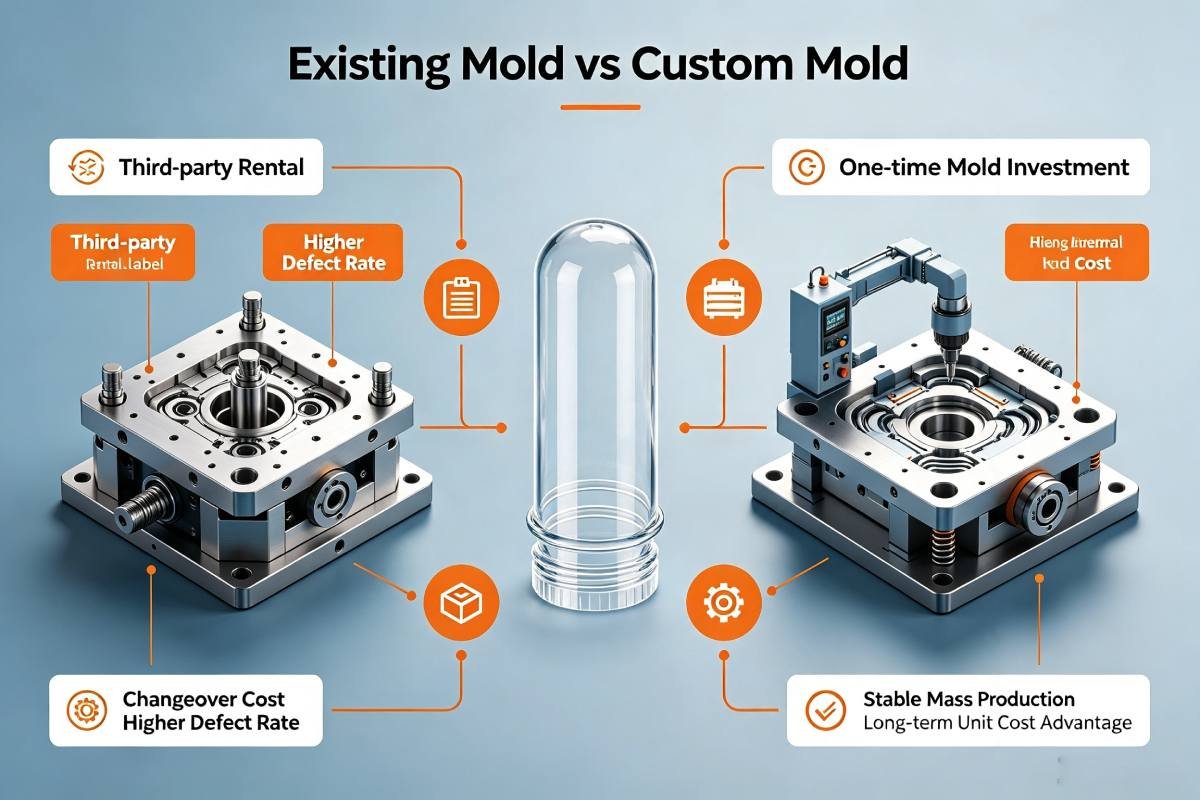
PET Preforms | Existing Mold vs Custom New Mold Comparison Introduction Many buyers sourcing PET preforms naturally assume that using existing molds will save mold development fees and result in cheaper unit prices. But after inquiry, they often find preforms made from third-party existing molds have a higher unit price than mass-produced preforms from newly…
-
How Long Does It Take to Develop a Mold for Export Food Bottles

How Long Does It Take to Develop a Mold for Export Food Bottles Introduction How long does it take to develop a custom mold for export food packaging? This is one of the most common questions from overseas buyers, importers, and food brand owners. Many customers assume the lead time is simply 30 to 45…
-
Silicone Valve Flip-Top Caps | Precision Dispensing Solution for Squeeze Bottles

Silicon Valve Flip-Top Caps Dispensing Solution for Squeeze Bottle Introduction Silicone valve flip-top caps have become one of the most requested upgrades for squeeze bottles across food, personal care, and household cleaning categories. Unlike standard screw-on or open dispensing caps, this integrated design addresses many common pain points: uncontrolled flow, messy drips, product waste, leakage…