
Introduction
For B2B packaging buyers, beverage factory operators, and wholesale distributors, PET preform pricing always fluctuates with the raw material market. Many customers struggle to understand why preform quotations rise or drop suddenly, even with unchanged molds, specifications, and quality standards. The core root lies in PET resin price volatility. As the largest cost component of injection-molded bottle preforms, virgin PET resin directly controls the final factory price. This article thoroughly explains the complete cost logic of how PET resin prices influence PET preform quotations, helping buyers judge reasonable pricing, avoid overpaying, and make stable long-term procurement plans.
How PET Resin Price Affects PET Preform Quotation: The Core Cost Logic For B‑Buyers
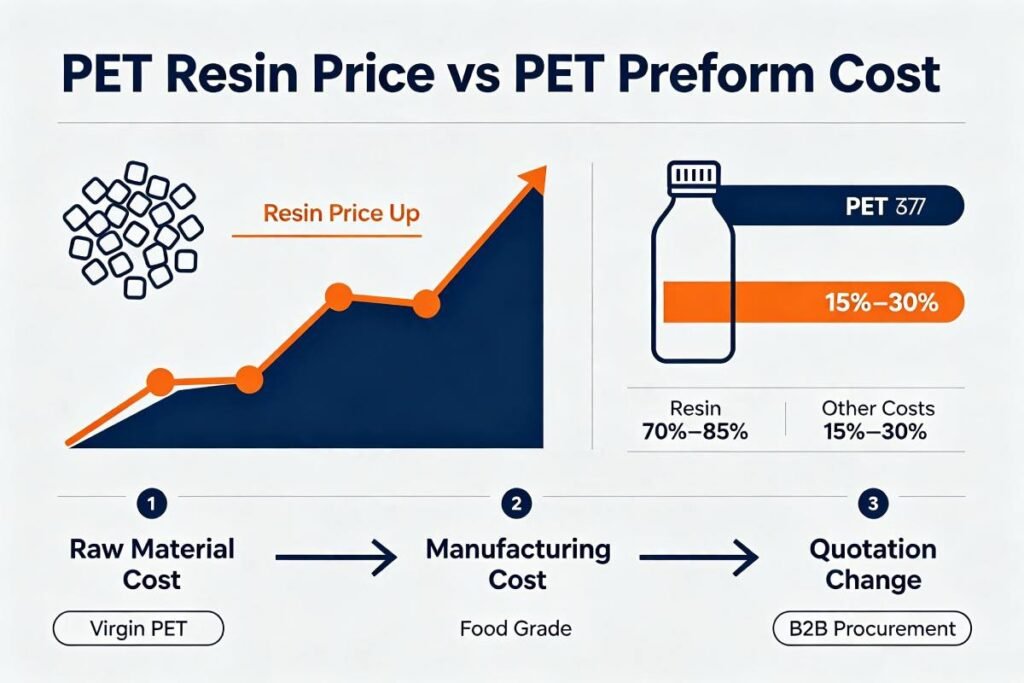
For bottling brand owners, beverage plant managers and packaging procurement directors, the first variable that moves your PET preform quotation is PET virgin resin. Unlike secondary costs such as labor, electricity and mold depreciation, PET resin accounts for roughly 70%–85% of a finished preform’s total manufacturing cost. Any fluctuation in the bulk resin market will directly reshape the final price your preform supplier offers.
Resin occupies the largest share of preform production cost
A 24g hot‑fill PET preform, a 28mm standard water preform, or custom heavy‑weight preforms all consume nearly fixed resin weight per unit. Once the mold is finalized, the grams of PET resin required for each preform cannot be reduced significantly. When the market price of food‑grade virgin PET pellets rises, the raw material expense for every single piece increases linearly. If resin cost drops, factories have room to adjust quotations downward, though the response speed varies greatly between suppliers.
Why suppliers cannot absorb large resin price increases forever
Many buyers expect their preform vendor to keep the old fixed price even after resin surges. This expectation often leads to delayed deliveries, quality downgrades or order rejection. PET preform factories operate on thin gross margins. Their profit margin on each preform is far smaller than the material cost. When resin jumps sharply, holding the original quotation will turn the production batch into a losing order. Responsible suppliers will send formal price adjustment notices rather than secretly switching to lower‑grade resin.
Different quotation modes react differently to resin volatility
Spot one‑time orders are the most sensitive to resin price. Your quotation closely follows the current market pellet price at the moment of inquiry. Medium‑term framework contracts with pre‑agreed price adjustment clauses bring more stability. Some packaging suppliers tie their long‑term preform pricing to public petrochemical resin indexes, enabling transparent price revision instead of sudden, unexplained quotation changes.
Other cost layers that interact with resin price
Resin cost is the dominant factor, but it does not work alone. Injection molding energy cost, labor, mold maintenance, food‑grade testing, sea freight and minimum‑order constraints also enter the final preform price. When resin price is stable, these secondary items become the main negotiation points between you and the preform manufacturer. When resin swings wildly, however, all other factors become secondary.
Key takeaways for B‑side preform buyers
When evaluating PET preform quotations, always separate resin‑driven price movement from supplier profit markup. Track resin market trends to plan your procurement window, discuss price‑adjustment terms for bulk recurring orders, and confirm your supplier uses consistent food‑grade virgin PET regardless of market fluctuation. Understanding this core cost logic helps you avoid rushed purchasing decisions and build stable packaging supply chains.
Why Our Virgin PET Preforms Maintain Stable Quality Despite Price Fluctuations
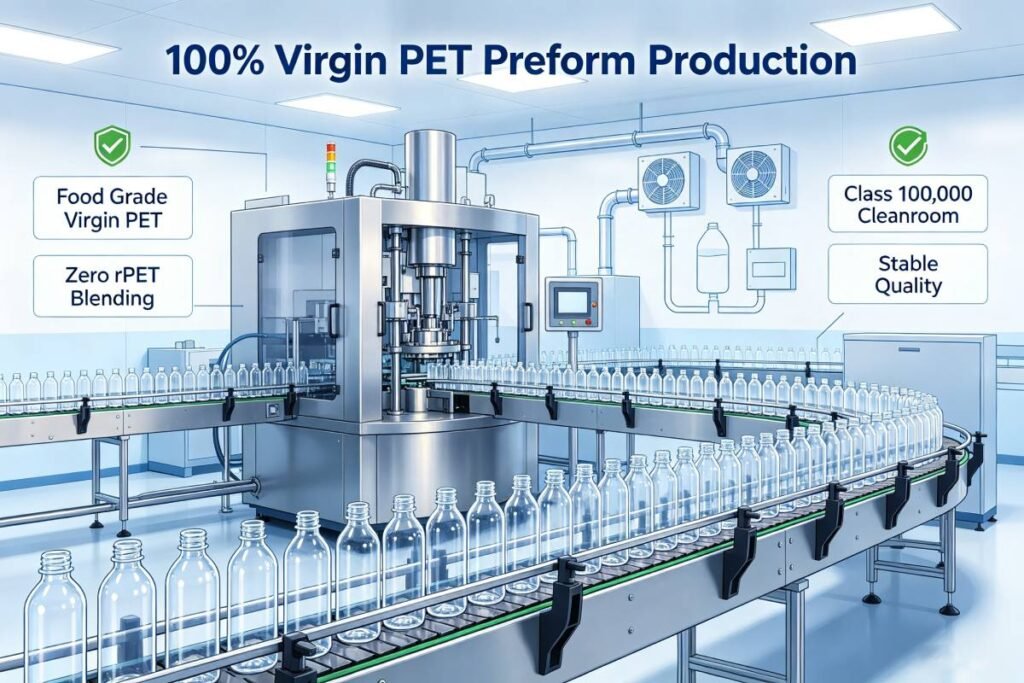
Different from factories that use recycled materials to cut costs during resin price surges, our factory strictly adopts 100% food‑grade virgin PET raw materials with zero recycled PET blending. Supported by Class 100,000 dust‑free cleanroom production and strict pre‑blow defect screening procedures, we never compromise product quality to adapt to raw material market changes. For long‑term B2B partners, we provide transparent cost explanations and reasonable price adjustment cycles, avoiding sudden quotation fluctuations and quality instability.
Get Your Wholesale Packaging Bottle Inquiry Solution
Tell us your requirement for capacity, color, logo printing. We will reply you within 24 working hours.