
Introduction
Essential oil packaging has always been a confusing point for cosmetic and aromatherapy brands. Many buyers ask the same question: Can PET bottles store essential oil long-term? Is plastic safe enough for pure essential oils?
Some suppliers say PET is completely usable, while others insist essential oils must use glass bottles. This vague industry statement leads brands to face product deterioration, bottle cracking, and even safety complaints after mass production.
To solve this universal doubt, we share a full professional analysis of PET & essential oil compatibility, covering safe scenarios, long-term risks, oil type classification, and material selection standards.
Is PET Material Naturally Compatible With Essential Oils?
PET (Polyethylene Terephthalate) is categorized as #1 food-grade plastic. Compared with PP, PS and PVC, PET has excellent chemical resistance and low permeability.
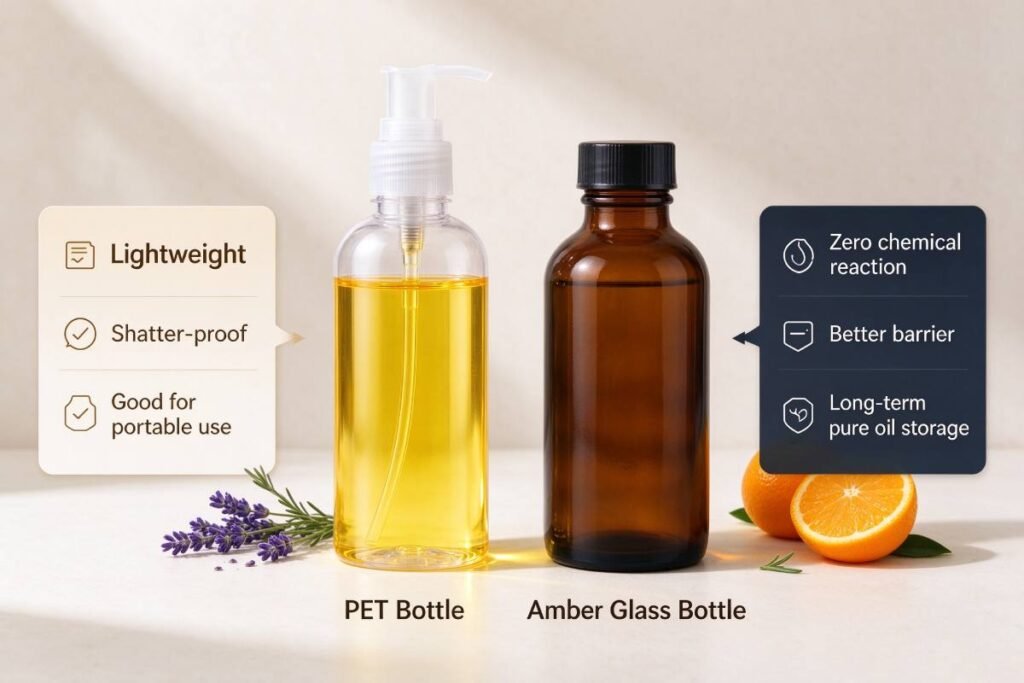
In short-term packaging tests, PET does not react with most mild essential oil ingredients. It is lightweight, shatter-proof and low-cost, which makes it popular for aromatherapy travel kits, body oil blends and daily cosmetic oil products.
However, “short-term compatibility” does not equal “long-term stability”. Pure essential oils contain high-concentration terpenes, phenols and volatile active ingredients. After months or years of storage, chemical micro-reactions will occur between the oil and PET inner wall.
Long-term Storage Risks: Why Pure Essential Oils Challenge PET Bottles
1. Slow plastic corrosion & bottle turbidity
Citrus-based essential oils (lemon, orange, grapefruit) contain high d-limonene. This ingredient will slowly penetrate and soften PET molecular chains during long-term sealing storage.
After 6–12 months, the bottle will turn cloudy, lose transparency, and even produce tiny cracks, affecting product appearance and grade.
2. Active ingredient loss & oxidation
Although PET has better barrier performance than other plastics, it still has micro oxygen permeability.
For long-term storage, external oxygen slowly enters the bottle, causing essential oil oxidation, weakened fragrance, reduced efficacy, and shortened shelf life.
3. Micro substance migration & safety hidden danger
Highly active essential oils will cause slight plastic aging. Aging PET may produce micro-migration substances into the oil.
This risk is not obvious in short-term use but will be amplified after one-year storage, failing cosmetic safety testing and causing consumer safety concerns.
Clear Classification: Which Essential Oils Can Use PET? Which Cannot?
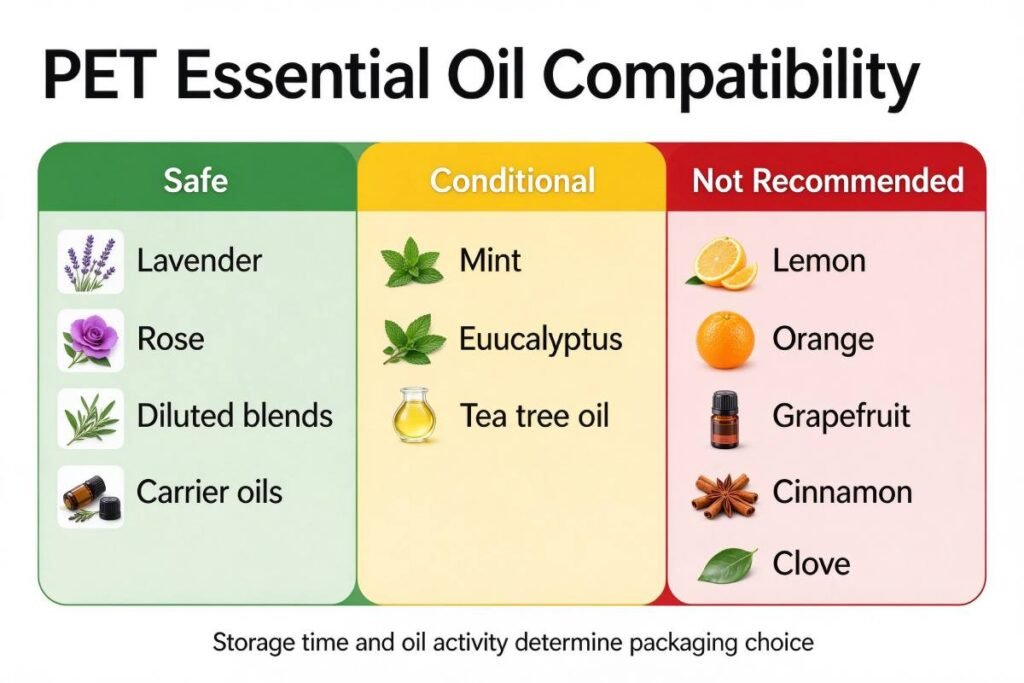
✅ Safe for PET (Long-term storage acceptable)
Diluted blended oils, base carrier oils (jojoba oil, sweet almond oil), mild floral essential oils (lavender, rose), low-activity aromatherapy formula oils.
These oils have stable chemical properties, weak corrosion, and will not damage PET structure within the shelf life.
⚠️ Conditional Use (Short-term only, within 3–6 months)
Mint oil, eucalyptus oil, tea tree oil.
Medium activity. PET is OK for travel packaging and short-cycle sales, but not recommended for over 6 months of inventory storage.
❌ Not Recommended for PET (Strictly glass only)
All pure citrus oils: lemon, orange, bergamot, grapefruit.
Highly spicy & active oils: cinnamon, clove, rosemary.
These high-terpene, high-activity oils will definitely erode PET plastic for long-term storage, leading to quality failure.
PET vs Glass Bottle: Long-term Essential Oil Packaging Standard
PET Bottle Advantages
Light weight, no broken risk, low transportation cost, suitable for travel packages, portable sets and fast-moving consumer essential oil products.
Glass Bottle Advantages
Zero chemical reaction, zero migration, ultra-low oxygen permeability, completely lock fragrance and activity.
Amber glass provides UV protection, the only recognized safe solution for pure essential oil long-term storage (1–3 years).
Professional Suggestions: How Brands Choose Packaging Correctly
For pure single essential oils & high-end aromatherapy lines: Insist on amber glass bottles to ensure 100% shelf-life stability.
For diluted body oils, massage blends, travel portable oils: PET bottles are completely qualified and cost-effective.
If you need PET for long-term sales, choose thickened high-barrier PET bottles + anti-corrosion liner caps to reduce oxidation and corrosion risks.
Avoid transparent PET for long-term storage. Transparent material cannot block UV rays and accelerates essential oil deterioration.
Final Takeaway
PET bottles are not unsafe for essential oils, but they have clear usage boundaries.
It is not a “plastic vs glass” simple choice, but a decision based on oil ingredient concentration, activity and sales cycle.
Diluted & mild oils fit PET perfectly for cost and portability. Pure, high-activity citrus and spicy essential oils must adopt glass packaging for long-term storage to avoid quality degradation and after-sales risks.
FAQ
Q: Can PET bottles store lavender essential oil long-term?
A: Yes. Lavender oil is mild and stable. Thickened PET with good sealing can support long-term storage.
Q: Why do most pure citrus oils not use PET?
A: Citrus essential oils contain high d-limonene, which slowly corrodes PET plastic, causing clouding, cracking and ingredient deterioration after long storage.
Q: How to improve PET essential oil bottle storage stability?
A: Use amber/colored thickened barrier PET, match anti-corrosion liner caps, avoid light and high-temperature environment, and control inventory cycle within 6 months for high-activity oils.
Get Your Wholesale Packaging Bottle Inquiry Solution
Tell us your requirement for capacity, color, logo printing. We will reply you within 24 working hours.