
Introduction
If you cook often, grill outdoors, or prep homemade sauces, you know the frustration: you pick up your squeeze bottle, give it a firm squeeze, and nothing comes out. A crusty, dried plug of ketchup, BBQ sauce, glaze or chili paste has sealed the nozzle shut. Clogging is not just an annoying mess; it wastes sauce, ruins plating, and leaves you scraping hard residue out of tiny spout holes. The root cause is simple: leftover sauce stuck in the nozzle touches air, dries out, and hardens.
You can download our available mold list as below to check in-stock molds and save your tooling cost.
How the Cross-Slit Silicone Valve Stops Clogs
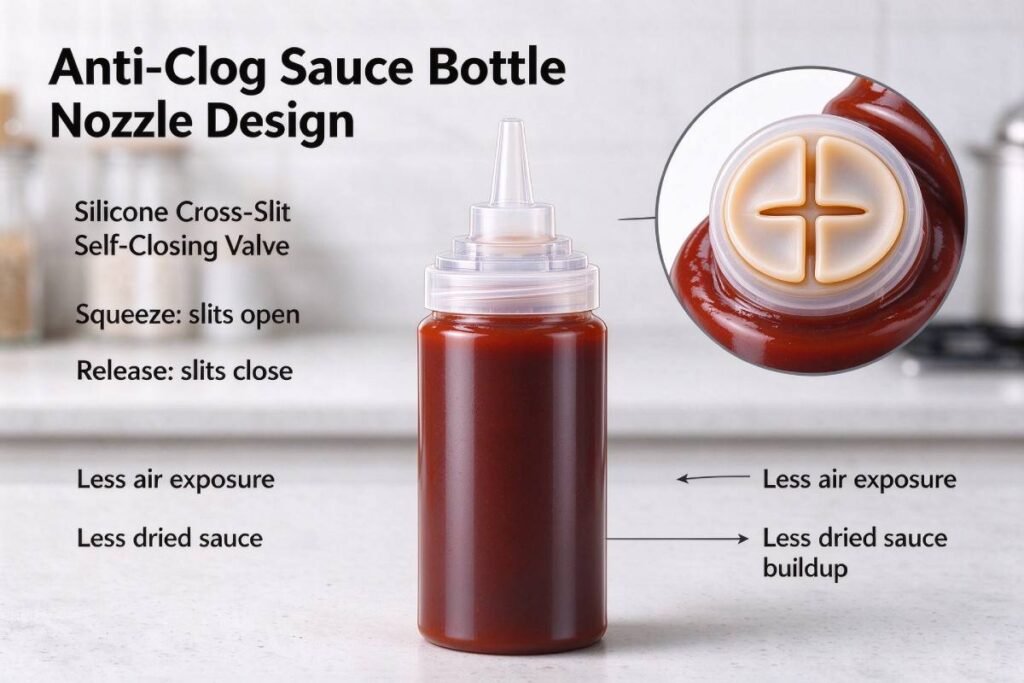
The most reliable anti-clog design is the silicone cross-slit valve nozzle, also called a self-closing cross-cut silicone valve. It is the gold standard for both home kitchen squeeze bottles and commercial condiment packaging, and it beats old-fashioned open-cut tips by a wide margin.
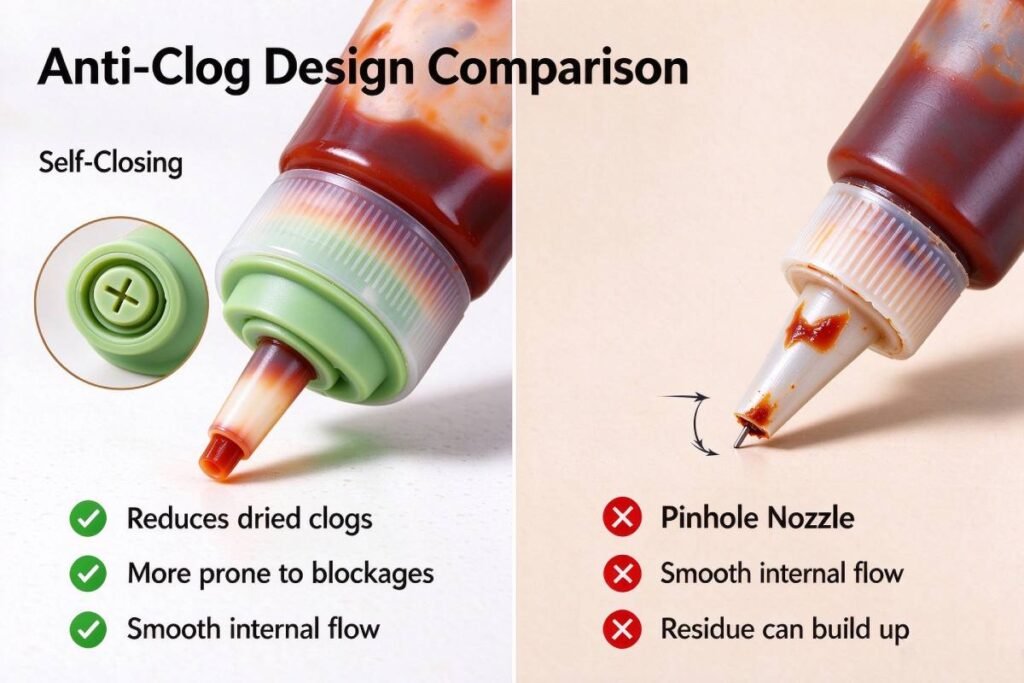
Unlike a regular open hole that stays exposed to air after use, the cross-slit nozzle is a flexible silicone membrane with thin, intersecting slits.
When you squeeze the bottle, internal pressure pushes the slits open, letting sauce flow smoothly. The moment you release pressure, the flexible silicone snaps the slits fully shut. It creates an immediate airtight seal right at the dispensing point, so sauce cannot linger inside the nozzle opening to dry and crust over.
This design also cuts down on dripping. No sticky sauce hangs on the tip between uses, which is the main source of crust buildup. It works beautifully for thick, slow-flowing sauces such as tomato ketchup, mustard, BBQ sauce, honey, garlic paste and creamy salad dressings.
Other Helpful Anti-Clog Design Features to Look For
A good valve is the star, but these supporting details make the bottle even less likely to clog:
1. Smooth, rounded internal channels
Sharp corners or narrow, twisty passageways trap sauce residue. Anti-clog nozzles use smooth, streamlined paths so sauce flows all the way out instead of getting caught in crevices.
2. Removable, fully disassemblable nozzle cap
Even the best valve needs cleaning sometimes. A nozzle that pulls apart easily lets you rinse the silicone slit with warm water, without tiny scrubbing tools.
3. Tethered flip-top protective cap
The silicone valve seals itself, but an extra flip cap adds a second layer of protection. It keeps dust, grease and dry kitchen air away from the tip during long storage, especially for bottles sitting outside at a BBQ or food stall.
4. Well-sized opening matched to sauce thickness
For ultra-thick sauces, a slightly larger cross-slit works better. Tiny micro-slits are great for thin drizzles but can still jam with chunky sauce that has seeds or pulp. Wide-mouth bottle bodies also make refilling and straining sauces easier, which reduces solid bits reaching the nozzle in the first place.
Designs That Are Most Likely to Clog
It helps to know what to avoid:
– Simple snipped plastic cone tips: stays open constantly, sauce dries fast.
– Tiny fixed pinhole nozzles: easy for pulp, spices and thick paste to get wedged inside.
– Multi-hole sprinkle caps: small holes are notoriously prone to crusting shut.
– Complex rigid plastic valve systems with small moving parts: food gets trapped in hinges and gaps.
Quick Real-World Tips to Pair with Your Anti-Clog Bottle
The design does most of the work, but these habits extend its clog-free life:
– Strain homemade sauces to remove seeds, skin and large solid chunks before pouring in.
– Wipe the nozzle briefly after heavy use, especially with sugary BBQ glazes.
– Rinse the silicone valve with warm water if you will not use the bottle for more than a few days.
– Do not leave squeeze bottles sitting in hot direct sunlight; heat speeds up drying and crusting.
Final Verdict
If your top priority is stopping nozzle clogs, choose a squeeze bottle fitted with a food-grade silicone cross-slit self-closing valve nozzle. It addresses the core problem: air exposure to leftover sauce at the tip. Open-tip bottles are cheap, but they fight a losing battle against dried condiment. The cross-slit design keeps the sauce inside the bottle, not stuck in the nozzle, for smooth, clog-free squeezes every time.
FAQ
Q: Which nozzle type is best for thick sauces?
A: A silicone cross-slit self-closing valve with a slightly larger opening works best for thick ketchup, mustard and BBQ sauce, as it resists drying and crusting between uses.
Q: Why does an open-tip squeeze bottle clog so easily?
A: An open tip keeps the nozzle exposed to air, so leftover sauce dries out and hardens into a crust that blocks the hole. A self-closing valve seals the opening after each squeeze.
Q: Can a clogged nozzle be cleaned without replacing the bottle?
A: Yes. Choose a bottle with a removable nozzle, soak the silicone valve in warm water, rinse the slit, and use a thin brush only if needed. Straining chunky sauces beforehand helps prevent future clogs.
Get Your Wholesale Packaging Bottle Inquiry Solution
Tell us your requirement for capacity, color, logo printing. We will reply you within 24 working hours.