

Introduction
Veterinary packaging has much stricter compatibility requirements than regular cosmetic packaging. Wrong bottle material may lead to drug discoloration, precipitation, active ingredient degradation, bottle swelling, leakage and even failure of veterinary registration.
Many veterinary buyers only focus on bottle size, cap type and price, ignoring chemical compatibility between liquid formula and plastic resin. This hidden risk often appears after mass filling and long storage.
This guide sorts out common veterinary liquid types and matched bottle materials, helping veterinary brands and distributors pick stable, registration-compliant packaging.
Main Resins Used for Veterinary Liquid Bottles
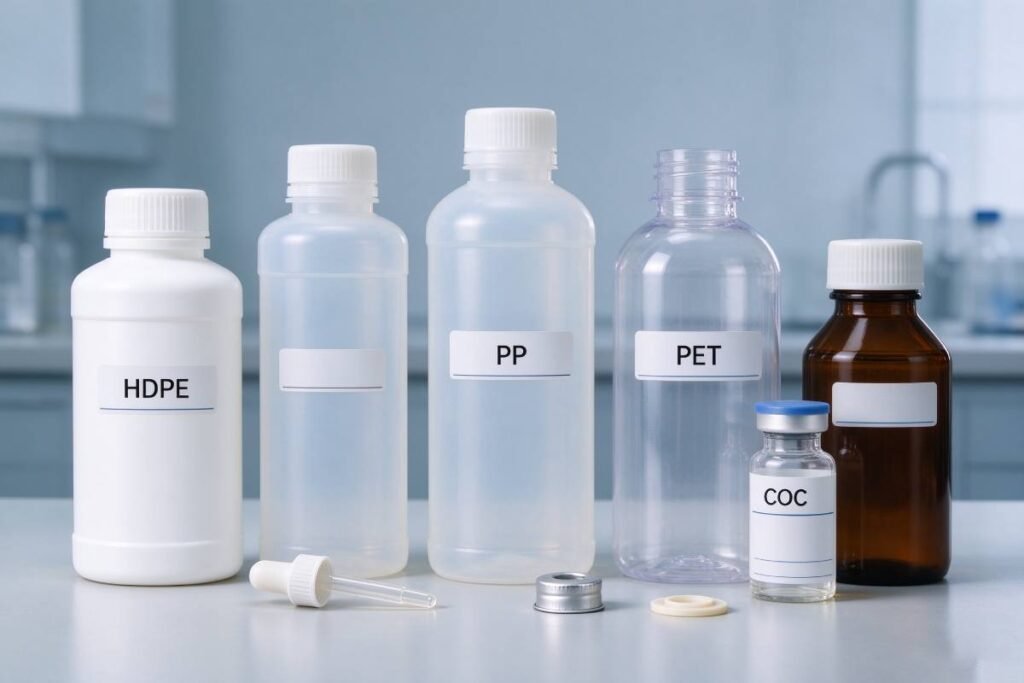
Before matching medicines, it is necessary to understand the basic properties of common plastic materials for veterinary packaging.
HDPE (High Density Polyethylene): Good chemical resistance, low moisture permeability, most widely used for veterinary oral liquids. Opaque, excellent acid and alkali resistance.
PP (Polypropylene): Heat resistant, can withstand autoclave sterilization, good rigidity, suitable for products needing high-temperature filling.
PET: Clear, good appearance, but weak resistance to strong solvents and high alcohol content formulas.
LDPE: Soft, flexible, often used for squeeze bottles and dropper bottles, poor barrier compared with HDPE.
COC / COP: High-end medical grade, ultra-low adsorption, for hormone, protein and sensitive active veterinary drugs.
PVC: Rarely recommended for liquid veterinary medicine; plasticizer migration risk, mostly phased out for oral animal drugs.
Material Matching by Veterinary Medicine Type
1. General oral liquid, vitamin supplements, mineral solutions
Typical products: multi-vitamin oral solution, electrolyte liquid, nutritional tonic for livestock and poultry.
✅ Recommended: HDPE bottle.
HDPE resists weak acid and weak base, blocks moisture well, stable for long shelf storage. It is the mainstream and cost-effective choice.
⚠️ Optional: PP bottle, if hot filling process is required.
❌ Not preferred: transparent PET, UV light will degrade vitamins quickly without adding UV barrier.
2. Antibiotic suspensions, aqueous suspensions
Typical products: florfenicol suspension, doxycycline suspension.
✅ Recommended: HDPE.
HDPE will not adsorb suspended particles, avoids formula agglomeration and concentration change. Opaque HDPE also protects light-sensitive antibiotics.
⚠️ Note: Pay attention to the liner compatibility of the cap. Some rubber liners will react with suspension agents.
3. Alcohol-based formulas, tincture, iodine disinfectant
Typical products: iodine tincture, alcohol disinfectant, herbal tincture with high ethanol.
✅ Recommended: HDPE or PP.
HDPE and PP have stable resistance to alcohol.
❌ Avoid: PET. High concentration alcohol will slowly cause PET swelling and stress cracking after long storage.
4. Strong acid / strong alkaline disinfectants, peracetic acid, sodium hypochlorite
Typical products: environment disinfectant for farm, chlorine-containing disinfectant.
✅ Recommended: HDPE.
HDPE has outstanding resistance to bleach and weak oxidizing disinfectants.
❌ Avoid: PET, COC. Oxidative ingredients attack these resins easily.
5. Sensitive biological drugs, peptide, hormone, low-dose active drugs
Typical products: hormonal veterinary liquid, protein biological agent.
✅ Recommended: COC / COP medical bottle.
COC hardly adsorbs active ingredients, so the drug concentration remains consistent during shelf life.
⚠️ HDPE and PP have certain adsorption risk, which may reduce the effective content of low-dose drugs.
6. Oil-based veterinary liquid, oily injection adjuvant, herbal oil
✅ Recommended: HDPE or PP.
❌ Avoid long-term use of PET, oil will slowly penetrate PET and cause bottle cracking.
Common Compatibility Failure Phenomena You Need To Watch Out For
Bottle swelling / deformation: The liquid solvent penetrates into plastic molecular chain.
Liquid discoloration: Chemical reaction between resin additive and active ingredient.
Precipitation or flocculation: Adsorption of active substance by plastic inner wall.
Leakage and thread cracking: Material stress cracking induced by the formula.
Active content drops continuously: Adsorption or oxidation.
Key Extra Tips for Veterinary Packaging
Veterinary packaging usually needs to comply with local veterinary registration requirements. Material test report and compatibility test record are often required for filing.
Cap liner is equally important. Even if the bottle material is correct, incompatible gasket can cause contamination and deterioration.
Color selection: Opaque white/black HDPE is preferred for light-sensitive medicines. Transparent PET is only suitable for stable, non-light-sensitive formulas with short shelf life.
Always suggest compatibility pre-test before bulk order: fill the real liquid sample and do accelerated ageing test.
Final Takeaway
HDPE is the workhorse for most veterinary oral liquids and disinfectants because of balanced chemical resistance and cost.
PP is for hot filling scenarios, COC is reserved for high-value sensitive biological veterinary drugs, while PET has very limited usage in veterinary liquid.
Material selection cannot only depend on appearance and price. Matching resin with solvent, pH value, active ingredient and storage term is the foundation to avoid after-sales and registration risks.
FAQ
Q: Can I use PET bottles for veterinary oral liquid?
A: Only for stable, water-based, non-alcohol, non-oily and non-light-sensitive formulas with short shelf life. It is not a general choice for veterinary medicine.
Q: Why HDPE is the most popular veterinary bottle material?
A: HDPE has excellent resistance to acid, alkali, alcohol and aqueous medicine, low moisture transmission, stable and cost-effective, easy to get veterinary packaging certification.
Q: Is compatibility test mandatory for veterinary packaging?
A: For formal veterinary registration, compatibility and stability test data are normally required. We highly recommend accelerated compatibility test before mass production.
Get Your Wholesale Packaging Bottle Inquiry Solution
Tell us your requirement for capacity, color, logo printing. We will reply you within 24 working hours.