
Typical Blow Mold Cycle Life
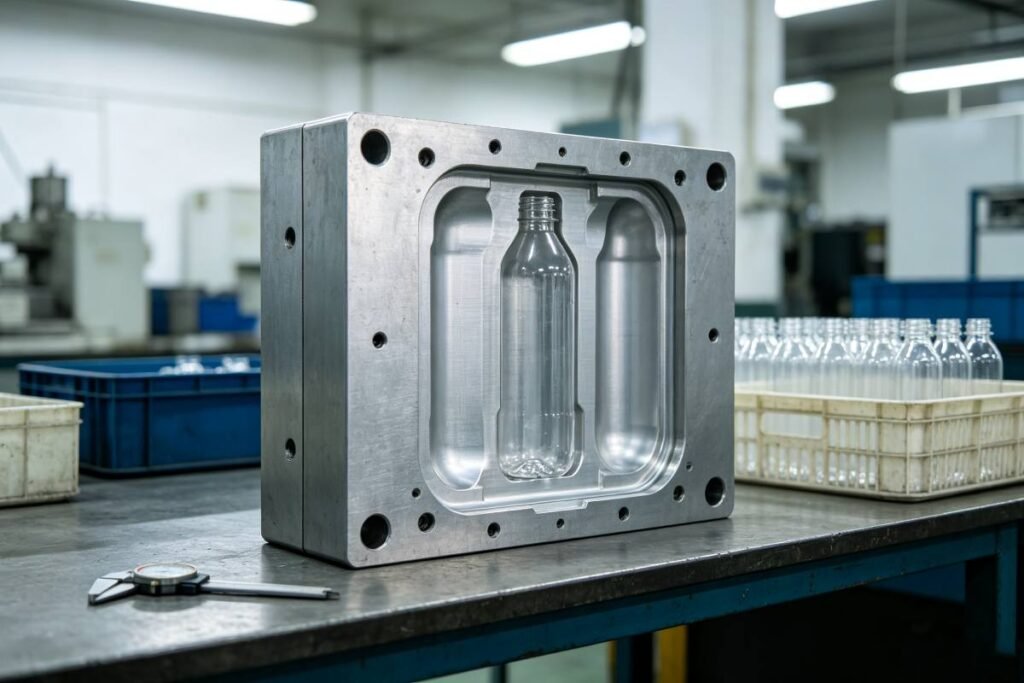
Custom PET bottle blow molds are built from different grades of aluminum or steel, which is the biggest factor determining their total cycle life. Standard aluminum blow molds, widely used for low to medium volume orders, usually deliver 300,000 to 1,000,000 shots under normal operation. Hard anodized aluminum molds can extend this range closer to 1.5 million cycles.
Steel blow molds are reserved for high-volume, long-running packaging projects. They commonly reach 3 million to 10 million cycles with consistent care. These numbers are baseline expectations; actual usable life will drop if the mold runs without proper cooling, lubrication, or regular cleaning. Buyers should align mold material selection with their forecasted annual order quantity during the quotation stage.
Factors That Reduce Mold Life
Many avoidable issues accelerate wear on PET blow molds. Poor cooling design leads to uneven thermal cycling, creating thermal fatigue and surface cracking over time. Dirty PET resin with dust, regrind contaminants or hard particles scratches the mold cavity surface and wears the pinch-off edges quickly.
Other common damaging factors include improper blow pressure settings, misaligned mold clamping, delayed removal of PET residue, and accidental dents or scratches during mold handling and storage. Frequent color changes also add extra cleaning cycles, which gradually wear the cavity polish and sealing edges. Even minor pinch-off wear will show up as flashing, thin bottle walls and inconsistent part quality long before the mold is fully unusable.
Preventive Maintenance Schedule
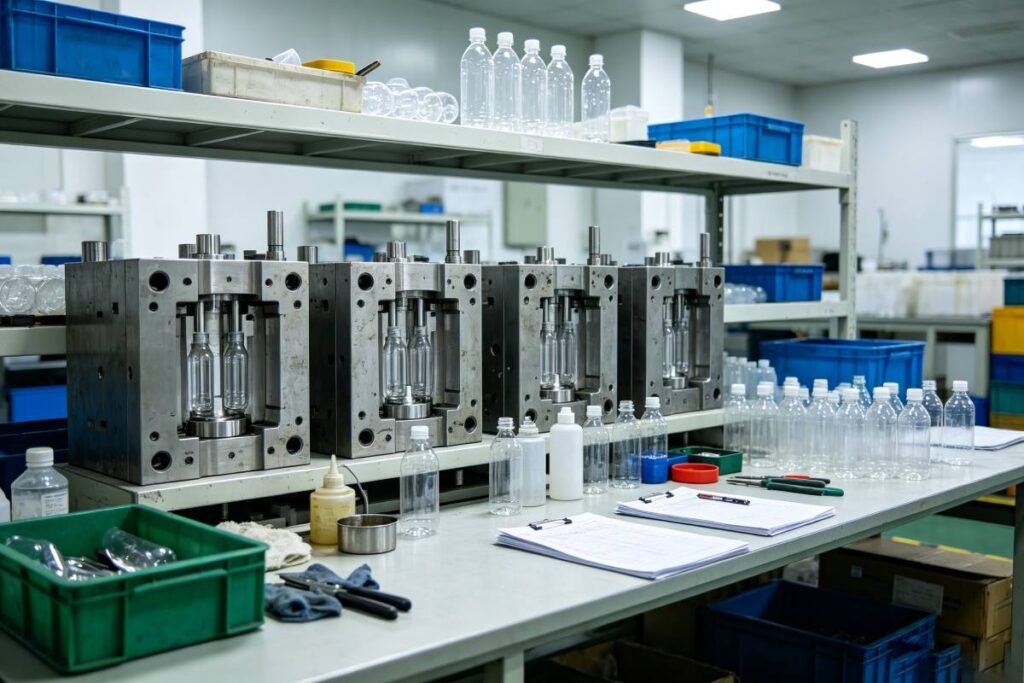
A fixed maintenance routine protects your blow mold investment and keeps bottle quality stable. After every production run, operators should fully clean the cavity, vent slots and pinch-off areas to remove residual PET buildup and dust. Gentle polishing is needed periodically to maintain surface finish without removing too much mold material.
Check cooling lines for blockage and leaks every 50,000 cycles. Inspect vent inserts, pinch-off edges and guide pins for wear at regular intervals. Apply suitable anti-corrosion protection before long-term storage. Keep a simple maintenance log to record shot counts, cleaning dates and any repairs. This schedule helps you predict when refurbishment or replacement will be needed, avoiding sudden production stops.
Who Owns the Mold After Production
Mold ownership is one of the most frequently negotiated terms between bottle buyers and blow molding suppliers. It depends entirely on the payment arrangement written in your contract. If you fully cover the mold design and manufacturing cost, you usually own the mold outright.
Some suppliers offer subsidized or free molds on the condition that you place a minimum order volume; in this case, the supplier often retains mold ownership until you meet the agreed purchasing commitment. You must clarify storage responsibility, transfer fees and whether the supplier can use your cavity design for other customers. Always confirm ownership, storage duration and retrieval rules before mold fabrication starts.
FAQ
Does higher cavity count shorten mold life?
Not directly. A multi-cavity mold itself does not have a shorter total cycle life than a single-cavity mold made from the same material grade. The risk comes from uneven cooling, unbalanced blow pressure and inconsistent clamping force across all cavities. When one cavity runs hotter or sees extra stress, it will wear faster than the others. If well-built and well-tuned, multi-cavity molds can run to their rated shot count reliably.
Can worn molds cause compliance or safety issues?
Yes, especially for food-grade PET bottles. Worn pinch-offs create excess flash, thin bottle walls and inconsistent wall thickness. Thin spots may leak, crack or fail drop tests. Deep scratches on the cavity surface can trap bacteria and resin residue, which violates food contact packaging requirements. Severe wear can also create dimensional drift, causing caps to seal poorly. For food and beverage packaging, suppliers must retire or refurbish molds once surface defects affect product safety and regulatory compliance.
Get Your Wholesale Packaging Bottle Inquiry Solution
Tell us your requirement for capacity, color, logo printing. We will reply you within 24 working hours.