
Introduction
For supplement brands packaging hygroscopic, moisture-sensitive powder formulas such as protein, pre-workout, herbal extracts, probiotics and mineral blends, selecting the right plastic resin is critical. HDPE and PET are the two most common jar materials for supplement packaging, yet they perform very differently on moisture protection, chemical compatibility, thermal tolerance and recyclability.
There is no universal winner. The best choice depends on your powder’s hygroscopicity, filling temperature, shelf life targets, regional recycling rules and light protection requirements.
Water Vapor Transmission Rate Comparison
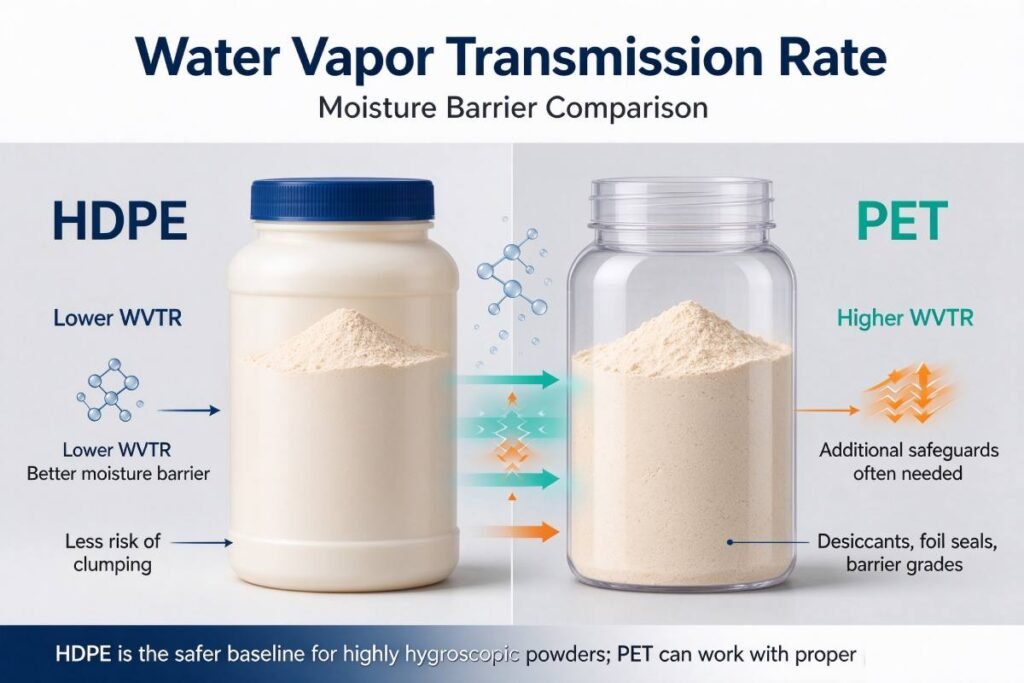
WVTR (Water Vapor Transmission Rate) is the core metric for hygroscopic powder packaging. It measures how much water vapour passes through the jar walls over time.
HDPE offers superior moisture barrier performance compared to standard PET. Its dense, non-polar structure slows vapour ingress, which helps keep clumping, caking and potency degradation under control for moisture-sensitive powders. For long shelf-life supplements without desiccants, HDPE is widely preferred.
Standard PET has a higher WVTR. It lets more moisture penetrate through the container wall. While PET can work for low-hygroscopicity powders, it usually requires extra safeguards: desiccant packets, foil induction seals, or coated barrier grades.
Note: Barrier-enhanced PET variants exist, but they raise cost and may affect recyclability.
Chemical Compatibility with Oils and Acids
Many supplement powders contain added oils, fatty acids, natural plant extracts, organic acids and flavour compounds that can interact with plastic packaging.
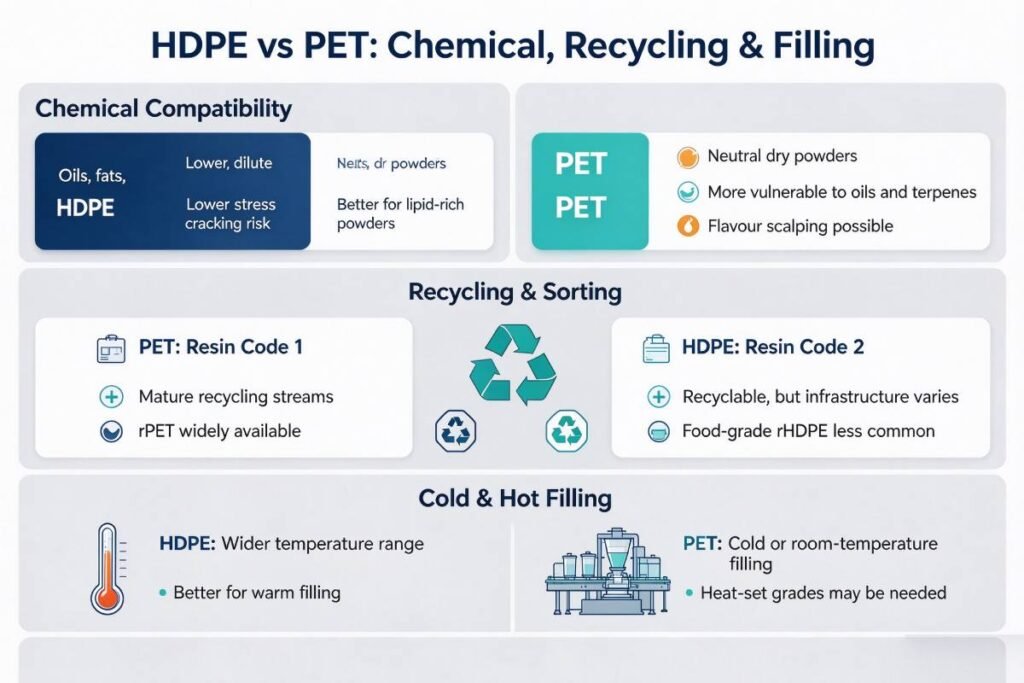
HDPE delivers excellent resistance to dilute acids, oils, fats and most botanical extracts. It is less prone to stress cracking, swelling or flavour absorption when in contact with lipid-rich powders. It also resists migration of plastic additives into the product.
PET performs well with neutral, dry, low-oil powders. However, PET is more vulnerable to certain acids, essential oils and concentrated terpenes. Over storage time, these compounds may cause flavour scalping, haze or minor stress cracking, especially with flexible thin-wall PET jars.
If your formula is high in oil, omega blends or acidic botanicals, HDPE is generally the safer baseline option.
Recycling and Sorting
PET is globally one of the most established and widely accepted recyclable plastics, marked as Resin Code 1. It has mature collection, sorting and reprocessing streams across North America, Europe and many APAC markets. Recycled PET (rPET) is readily available and commonly specified for sustainability-focused supplement lines.
HDPE is Resin Code 2 and also recyclable, but recovery rates and reprocessing infrastructure vary more by region. Some markets accept HDPE jars consistently, while others have limited HDPE recycling capacity. HDPE regrind is frequently used for non-food packaging and industrial goods, and food-grade recycled HDPE supply is less accessible than rPET in many regions.
Brands targeting eco-marketing need to verify local recycling schemes before locking resin selection.
Suitability for Cold and Hot Filling
Filling temperature directly impacts container stability, dimensional tolerance and sealing performance.
HDPE handles a wider temperature range. It tolerates warm and moderately hot filling better than standard PET, with lower risk of shrinkage or distortion. It is a reliable pick if you fill powders at elevated temperatures or run post-fill heat treatment.
PET has a lower heat deflection threshold. Standard PET jars can deform easily under hot filling conditions. PET is best suited for cold or room-temperature filling only. If hot filling is required, special heat-set PET grades are needed, which add cost and lead time.
FAQ
Is HDPE always better for moisture sensitive powder?
No. HDPE has better inherent moisture barrier, but properly sealed PET jars with foil induction seals and desiccants can still work for moderately hygroscopic powders. PET may be preferred if you prioritise clarity, premium transparent aesthetics or rPET sustainability credentials. For highly hygroscopic formulations with long shelf life, HDPE is usually the safer default.
Can HDPE be amber for light protection?
Yes. HDPE can be pigmented amber, opaque white or black to block UV and visible light. Amber HDPE is a common choice for light-sensitive supplements such as herbal extracts, antioxidants and probiotic powders. Clear HDPE is less common, whereas clear PET is widely used when brands want consumers to see the powder inside.
Get Your Wholesale Packaging Bottle Inquiry Solution
Tell us your requirement for capacity, color, logo printing. We will reply you within 24 working hours.