
Introduction
The global food‑grade plastic bottle market keeps growing as more brand owners, distributors and contract packagers look for reliable packaging solutions for dry powders, sauces, nutritional supplements and edible oils. However, “food‑grade” does not automatically mean every plastic bottle is suitable for your product. Many importers only compare unit prices and overlook material limits, chemical resistance, certifications and even shipping efficiency. This guide will walk you through key facts to make smarter bulk purchasing decisions for your business.
Overview of the Global Food‑Grade Plastic Bottle Market
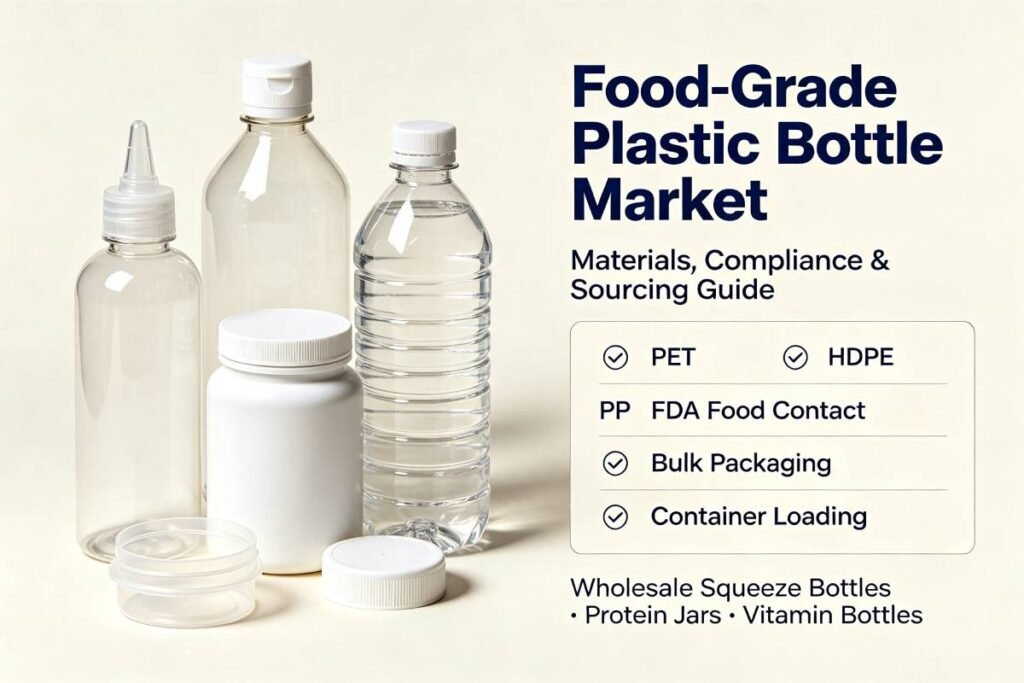
Today’s food‑grade plastic bottle market is dominated by two main resin types: PET and HDPE, with PP used for special‑purpose items such as high‑heat containers and screw caps. Popular finished products include squeeze sauce bottles, HDPE protein powder jars, PET vitamin & supplement bottles and custom containers for specialty dry foods.
One of the biggest hidden risks that many buyers ignore is ESCR (Environmental Stress Cracking). Even if a bottle is marked food‑grade, the wrong plastic may crack when filled with oily or fatty substances. A real example: one of our US customers planned to pack animal fat in standard PET bottles. While the filling temperature of 40°C was acceptable, long‑term contact with grease could create invisible stress and eventually break the PET container.
That is why material knowledge is just as important as price when you source from the food‑grade plastic bottle market.
Main Plastic Materials in the Food‑Grade Bottle Market
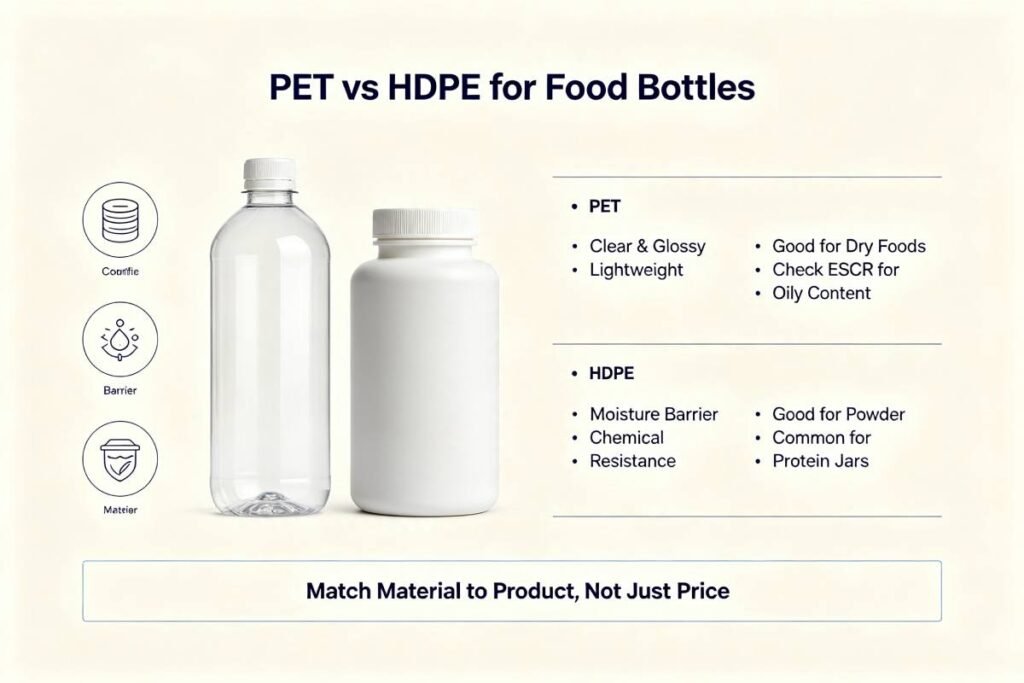
PET — Clear, Rigid & Cost‑Effective
- High transparency and glossy surface, great for product display on retail shelves
- Light weight and good rigidity, widely made from PET preforms
- Best for dry food, powder, sauce with low oil content, cold‑fill products
- Limitation: Higher ESCR risk. Not recommended for long‑term storage of high‑fat content; maximum continuous working temperature around 60‑70°C.
You can read our full comparison here: PET vs HDPE for squeeze bottles.
HDPE — Excellent Moisture & Chemical Barrier
- Opaque, strong moisture barrier, perfect for protein powder, vitamin powder and other hygroscopic dry goods
- Much better resistance to grease and stress cracking than PET
- Good chemical stability for most food contents
- Limitation: Not transparent; recommended service temperature below 80°C, cannot withstand high‑temperature hot filling.
PP — Special‑Use Food‑Grade Packaging
- Higher heat resistance compared with PET and HDPE
- Mostly used for injection‑molded caps, small cups and special high‑heat containers
- Rarely the first choice for large blow‑molded food bottles in the bulk market
Must‑Check Certifications in This Market
The phrase “food‑grade” is a descriptive term, not an official certificate. As a serious buyer, you should not trust only verbal promises from plastic bottle suppliers.
- For the US market: FDA food contact compliance, based on total migration and heavy metal test reports
- For European markets: EU 10/2011 food plastic regulation test reports
- Always ask for batch‑related test documents instead of one‑time general factory certificates
At Brotherpack, we can provide corresponding test records for our PET and HDPE food‑safe bottles upon request.
Practical Bulk Buying Tips for the Food‑Grade Bottle Market
Understand MOQ & Mould Conditions
- For existing moulds: MOQ is normally based on factory production batches
- For fully custom sizes and shapes: new mould investment will be required with separate lead time
- Many suppliers also sell PET preforms, which gives you another flexible sourcing option
Think Ahead About Shipping & Container Space
One professional tip few suppliers will tell you: shipping empty finished bottles takes huge container space. Buying PET preforms instead of finished bottles can greatly improve loading volume and lower your sea freight cost. Check our detailed guide: PET preform container loading guide.
Avoid Common Sourcing Mistakes
- Making purchase decisions based only on unit price without checking material suitability for your product
- Assuming all transparent plastic bottles are automatically safe for oil‑rich food
- Forgetting to confirm food contact documents before placing large orders
Popular Product Types in Our Food‑Grade Bottle Portfolio
- Food‑grade squeeze bottles — for ketchup, salad dressing and various sauces
- HDPE protein powder jars — ideal for sports nutrition and dry supplement powder
- PET vitamin & supplement bottles — for tablets, capsules and granular health products
- Custom plastic and metal caps — matching closures for all our food‑safe containers
FAQ
Q: What is the most common plastic for the food‑grade bottle market?
PET and HDPE are the two dominant materials for bulk food‑grade blow‑molded bottles. PET for visibility and HDPE for powder and oily contents.
Q: Are all transparent PET bottles food‑safe?
No. Transparency does not mean food safety. Raw resin quality and food‑contact approved production processes are required. Always ask for test reports.
Q: Can PET hold oil and animal fat for a long time?
Not recommended. Grease may trigger ESCR risk over time. HDPE is a safer choice for long‑term storage of fatty substances.
Q: What is the typical MOQ for wholesale food‑grade bottles?
MOQ varies between existing moulds and custom moulds. Contact us to get the exact minimum order for your required bottle item.
Q: Is HDPE better than PET for dry powder packaging?
Generally yes. HDPE provides better moisture barrier performance, which keeps protein powder and supplements from absorbing moisture from the air.
Conclusion
The food‑grade plastic bottle market is full of choices, but successful bulk sourcing needs more than a low price. You have to consider materials, possible chemical risks, compliance certificates and even logistics costs before you decide on your packaging partner.
If you are looking for reliable wholesale food‑safe plastic bottles, preforms and matching caps, feel free to contact Brotherpack for your free quotation.
Get Your Wholesale Packaging Bottle Inquiry Solution
Tell us your requirement for capacity, color, logo printing. We will reply you within 24 working hours.