
Introduction
Many importers and brand owners fall into a common trap: if a bottle is food-grade, it is safe for essential oils, tinctures and aromatic liquids. In reality, food-grade certification only proves it works for mild food, not for highly permeable essential oils.
We break down the material differences and compliance testing costs for packaging buyers.
Material Differences: Ordinary Food Bottles vs Essential Oil Bottles
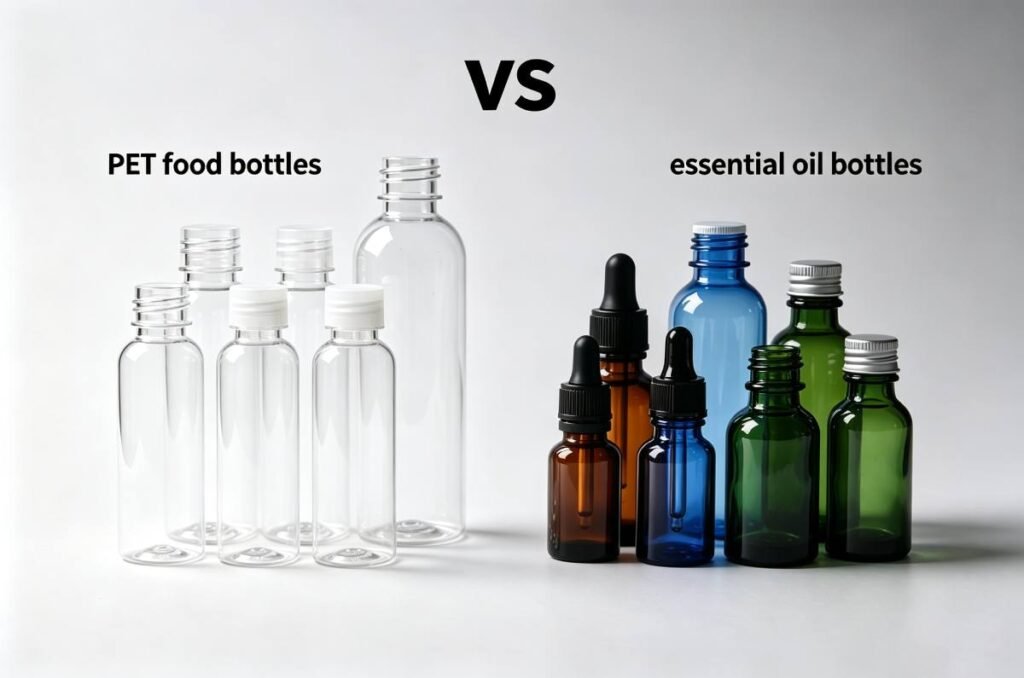
At first glance, many essential oil bottles look identical to regular food PET bottles, but the resin grade and formula are fundamentally different.
Standard food‑grade PET
This is common homopolymer PET without special modification. It is formulated and tested for water, fruit juice, dry powder and low‑fat sauces. It cannot resist the terpene and lipophilic compounds inside essential oils. Over time, these active ingredients will slowly infiltrate the plastic structure, causing swelling and migration.
Materials suitable for essential oils
Modified co‑polyester PET is the first option for plastic essential oil packaging. Its molecular structure is adjusted to reduce solvent swelling. PCTG delivers much better chemical resistance, widely used for premium tinctures. PP and HDPE resist oil erosion but have weaker aroma barrier properties. Glass remains the most inert choice for long‑term essential oil storage.
Differences in EU 10/2011 migration testing
The testing procedure stays similar, but the selection of simulants creates the price gap.
Test for regular food packaging
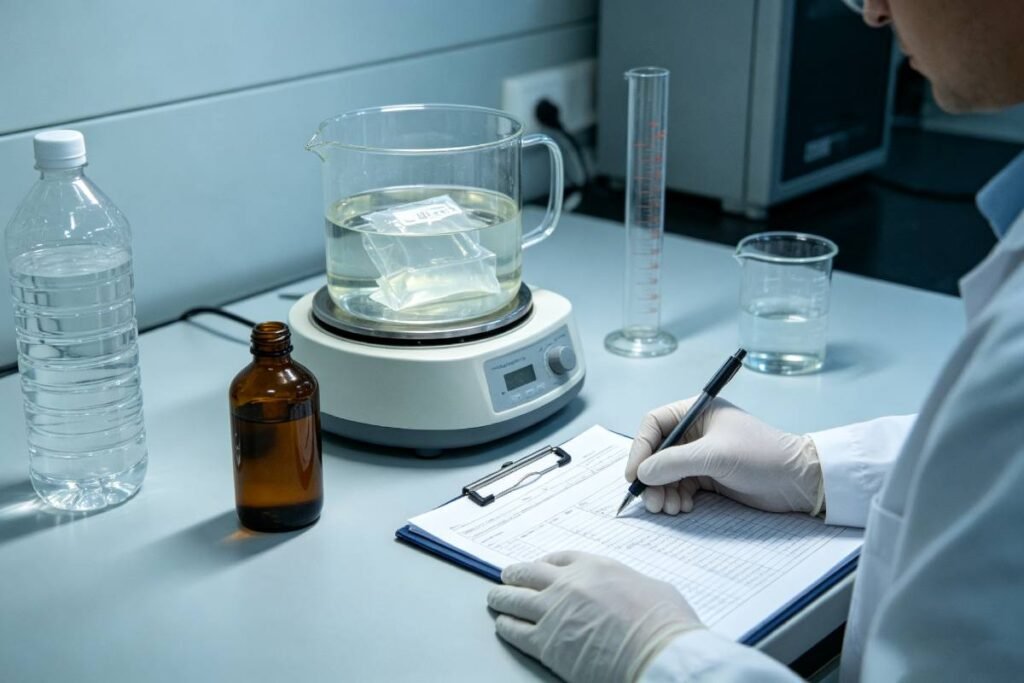
Labs use water, 3% acetic acid and 10% ethanol as simulants. This package covers most aqueous and low‑alcohol food products. It is the cheaper standard package for food contact compliance.
Test for essential oils and tinctures
For essential oils and high‑strength herbal extracts, labs apply 50% to 95% ethanol or isooctane to simulate oily and aromatic solvents. This version costs roughly 40%–80% more than the basic food migration test.
Extra compliance costs you need to know
If the buyer requires full documentation including overall migration, specific SML testing and a separate NIAS risk assessment, the total expense rises further. One important saving tip: the same resin family can reuse the base test report when changing colours; a new resin grade means a full retest.
Why mixing them up creates big risks for your brand
Using standard food bottles for essential oils will lead to faded scent, discoloration, plastic odour, seal failure and cargo detention at EU or US customs. A food contact certificate validated only for water‑based media will be rejected by regulators for essential oil shipments.
FAQ
Q: Can I use a food‑grade PET bottle for essential oil samples for a short time?
A: It works for temporary sampling within about one week, but it is not acceptable for bulk commercial stock and long shelf life.
Q: If the bottle is PET, does it automatically work for essential oil?
A: No. It depends entirely on the exact resin grade and copolymer formulation, which cannot be identified visually.
Q: Is the essential oil migration report valid for regular food?
A: Yes, but it is overkill and costs more than necessary for ordinary food products.
Get Your Wholesale Packaging Bottle Inquiry Solution
Tell us your requirement for capacity, color, logo printing. We will reply you within 24 working hours.