
Introduction
Food contact plastic packaging sold into the EU market is not only required to meet migration and material safety standards. Under EU Regulation 1935/2004, good manufacturing practice (GMP) is a mandatory legal obligation.
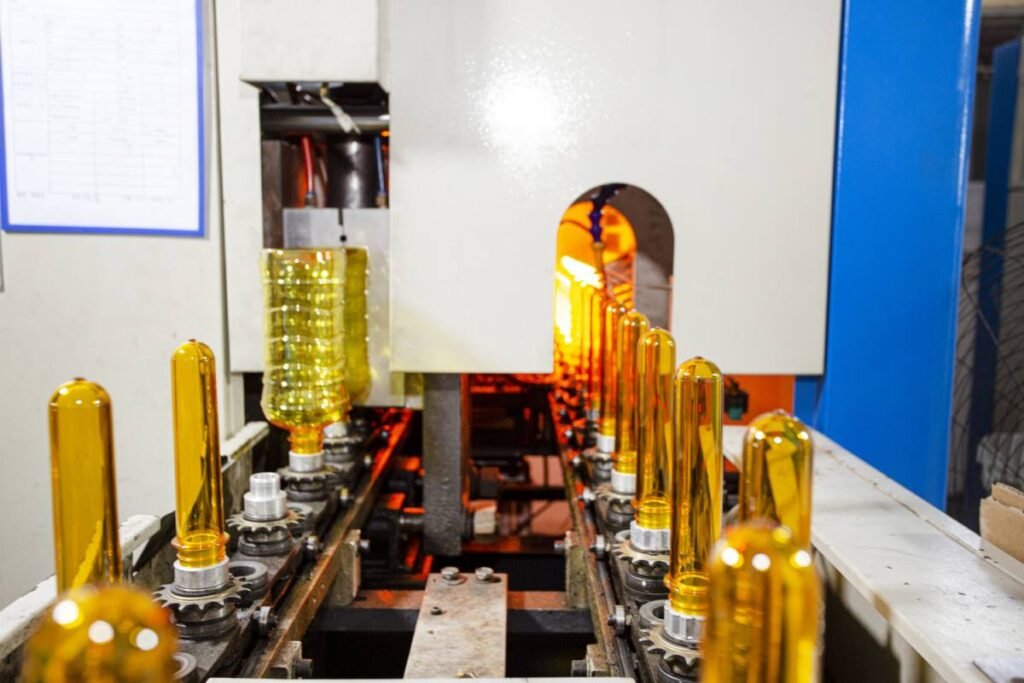
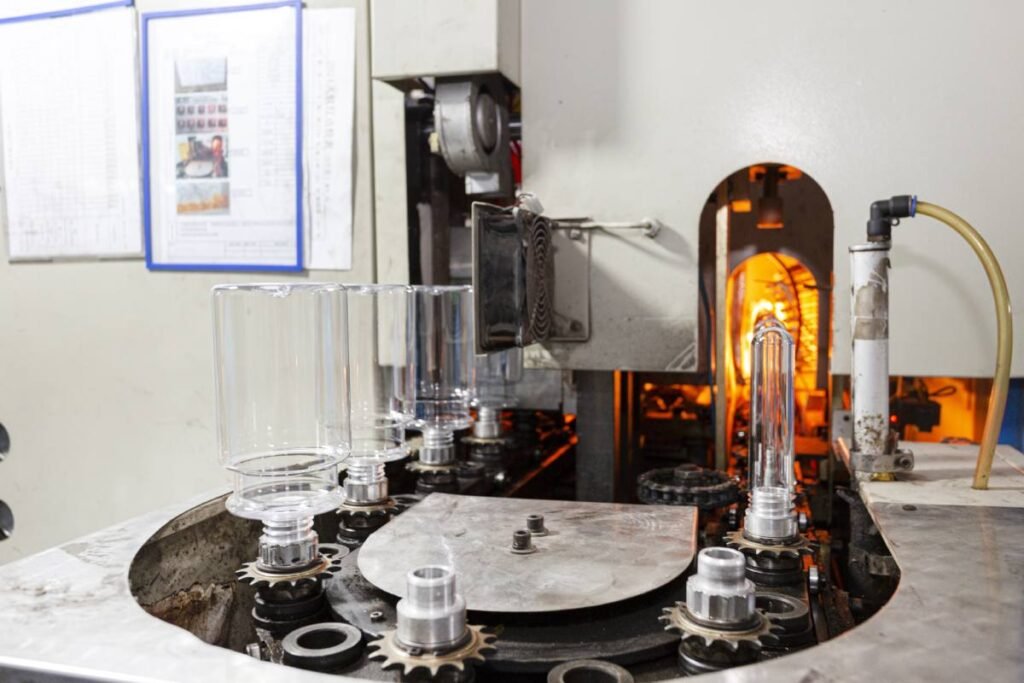
For blow molding, injection molding and extrusion packaging factories, GMP controls the whole production process to avoid cross-contamination, material mix-up and non-compliant finished goods. This article breaks down the core GMP rules and typical audit focus points for food packaging manufacturers.
Legal Basis for GMP in Food Packaging
The core legal foundation is EU Regulation (EC) No 1935/2004, the framework regulation for all materials and articles intended to come into contact with food.
Article 3 of this regulation sets the general safety principle: food contact materials must not transfer substances to food in quantities that endanger human health, bring unacceptable changes to food composition or deteriorate food organoleptic properties.
The dedicated GMP implementing rule is Regulation (EC) No 2023/2006, which specifies GMP requirements for food contact materials and articles. This regulation applies to every stage of manufacturing, processing and distribution of food packaging, including plastic bottle, container and closure production.
Important clarification: GMP under 2023/2006 is process-oriented. It requires factories to build, implement and maintain a documented GMP system, rather than just relying on final lab test reports of finished products. Even if your plastic packaging passes migration testing, poor GMP control during production will still lead to non-conformity during customer or notified body audits.
Production Zone Segregation Rules
Auditors pay high attention to physical separation inside the workshop, especially for blow molding plastic packaging factories.
1. Separation of food-contact grade and non-food-contact grade materials
Food-grade raw resin, regrind material and finished food packaging must be produced, stored and handled in isolated zones. Non-food grade plastic, industrial scraps, recycled resin without food contact approval cannot enter the food contact production area. Marking, dedicated pallet and dedicated transfer tools are required to avoid mixing.
2. Segregation of different material types and different product formulas
If your workshop runs multiple food-contact plastic grades (LDPE, PP, PET etc.), production changeover procedures must be written down. Cleaning verification and line clearance checks are mandatory between batches to prevent cross-contamination.
3. Contamination control zones
Dust, lubricant, cleaning chemical and foreign body risks are the main focus. Production areas shall be separated from maintenance workshops, chemical storage, waste scrap areas. Personnel flow should be controlled: staff must follow gowning rules before entering the food-contact production zone; street clothes cannot be brought into the production area.
For blow molding workshops, mold lubricants are a frequent risk point. Only food-contact approved lubricants can be used, with dosage control and application records.
Raw Material Traceability
Full traceability is one of the backbone requirements of EU GMP for food packaging.
– Every incoming raw material (plastic resin, color masterbatch, additive, coating, adhesive) must have supporting documentation: food contact compliance declaration, specification sheet, test report and supplier approval record.
– You need a one-up, one-down traceability system: each batch of raw material can be traced to finished goods batches, and each finished batch can be traced back to raw material lots, supplier and incoming inspection records.
– Regrind / recycled material: if you use in-house regrind from food-contact production, define allowed regrind ratio, contamination check and regrind handling SOP. External recycled plastic is heavily restricted; most food contact plastic applications cannot use unapproved post-consumer recycled resin.
– Incoming inspection: every raw material delivery shall be checked against specification, label and compliance documents before release to production. Non-conforming materials must be quarantined and clearly labelled.
Batch Record Keeping
Batch records are the primary evidence auditors review to verify your GMP system is actually followed, not just written on paper.
A complete batch record for plastic packaging should include:
– Unique batch number and production date
– List of raw material batch numbers consumed in this run
– Production line / mold number, start and end time of production
– Changeover and line clearance check records
– In-process control data: visual inspection, dimension check, weight control
– Equipment cleaning records
– Finished product release result, inspector name and release date
– Quantity produced, quantity rejected, scrap quantity and disposition of non-conforming units
Batch records must be filled out contemporaneously during production, not pre-filled or bulk-filled after production. Handwritten records need to be legible, with no unauthorized alteration. Any correction must be signed and dated.
Common GMP Audit Fail Points
Most packaging factories receive non-conformities on these items during EU GMP audits:
1. Missing or incomplete batch records, no evidence of line clearance between product runs
2. Mixing of food-grade and non-food-grade plastic scraps on the same production floor
3. Unapproved lubricants, mold release agents or cleaning chemicals used on food contact surfaces
4. Poor traceability: cannot link finished batch numbers back to raw material certificates
5. Uncontrolled regrind material, no defined limit or contamination check
6. Staff without formal GMP training, no gowning and hygiene SOP enforced
7. Non-conforming products without quarantine, no corrective action and root cause records
8. Outdated supplier compliance documents, expired food contact declarations
Note: A GMP audit failure does not automatically invalidate your migration test report. However, EU customers can reject your shipments and suspend approval of your factory until corrective actions are verified and closed.
FAQ
Q: Do I need a separate GMP certificate?
A: Regulation 2023/2006 does not issue a mandatory, official EU GMP certificate for food packaging. Unlike pharmaceutical GMP, there is no government-issued GMP license.
Many EU customers will require third-party GMP audit reports (such as audits carried out by notified bodies or certification bodies). This audit report is customer-specific proof that your GMP system meets 2023/2006 requirements. Some retailers or brand owners will accept their own second-party audit results instead of an external certificate.
Q: How long should batch records be retained?
A: Batch records, raw material certificates, traceability documents and non-conformity records shall be kept for at least 5 years in most EU customer requirements.
The legal requirement under 1935/2004 requires records to be stored for the shelf life of the product plus additional time. For plastic packaging with a long service life, the widely accepted industry standard is 5 years of archive retention. Records can be stored in electronic or paper format, as long as they are retrievable and protected from loss or damage.