Introduction
For PET preform procurement, sample confirmation directly decides the success of your later bulk order project. Many overseas purchasers only briefly check sample appearance and place bulk orders immediately. Defects such as weight deviation, mismatched neck dimension and excessive acetaldehyde residue are only found during blow molding, which leads to heavy losses.
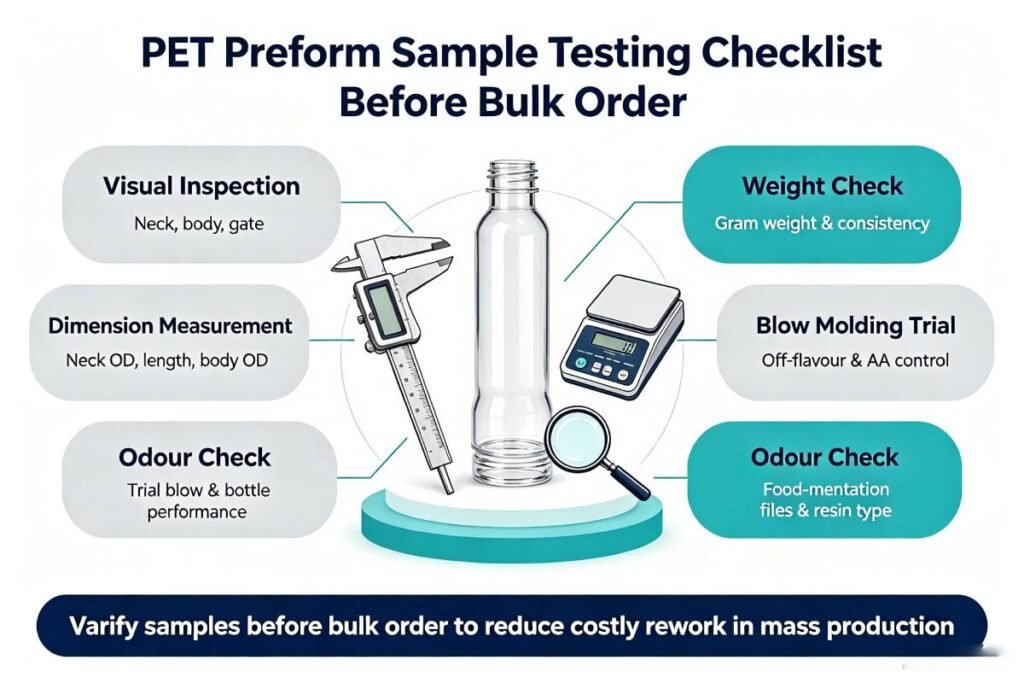
This easy‑to‑follow checklist is made for blow molding factories and packaging buyers. It covers basic self‑testing items you need to complete after receiving PET preform samples and before confirming large orders. Most checks can be finished with regular workshop tools, helping you avoid most high‑quality risks in advance.
Visual Inspection
Start your test with visual check to spot obvious defects at first sight.
1. Neck area: Check complete threads without chips, cracks or flash; confirm flat sealing surface of the neck finish, which directly decides cap sealing performance.
2. Preform body: Inspect for bubbles, black specks, foreign contaminants, whitening haze, scratches, dents and burn marks.
3. Gate bottom: Check consistent gate size, no stretching, stringing or burn traces.
> Important note: A tiny number of micro black specks may be acceptable within industry thresholds, while food‑grade packaging has strict limits on speck size and quantity.
Weight Check
Preform gram weight is one of the most critical specifications.
• Required tool: High‑precision electronic scale
• Operation: Randomly select multiple samples for separate weighing. Record individual weight to verify compliance with quoted specification, and check weight consistency across the sample batch.
• Potential risks: Underweight → insufficient bottle wall thickness after blowing, poor pressure resistance; Overweight → higher material cost beyond your budget.
Key Dimension Measurement
Measure core dimensions that decide blow molding compatibility:
1. Neck outer diameter, inner diameter and thread size (Top priority, determines matching of your existing caps and blow mold)
2. Overall preform length, body outer diameter
Many buyers only verify gram weight but ignore neck dimension, resulting in serious problems including leaking caps or failure to load on blow molding machines.
Blow Molding Trial Test
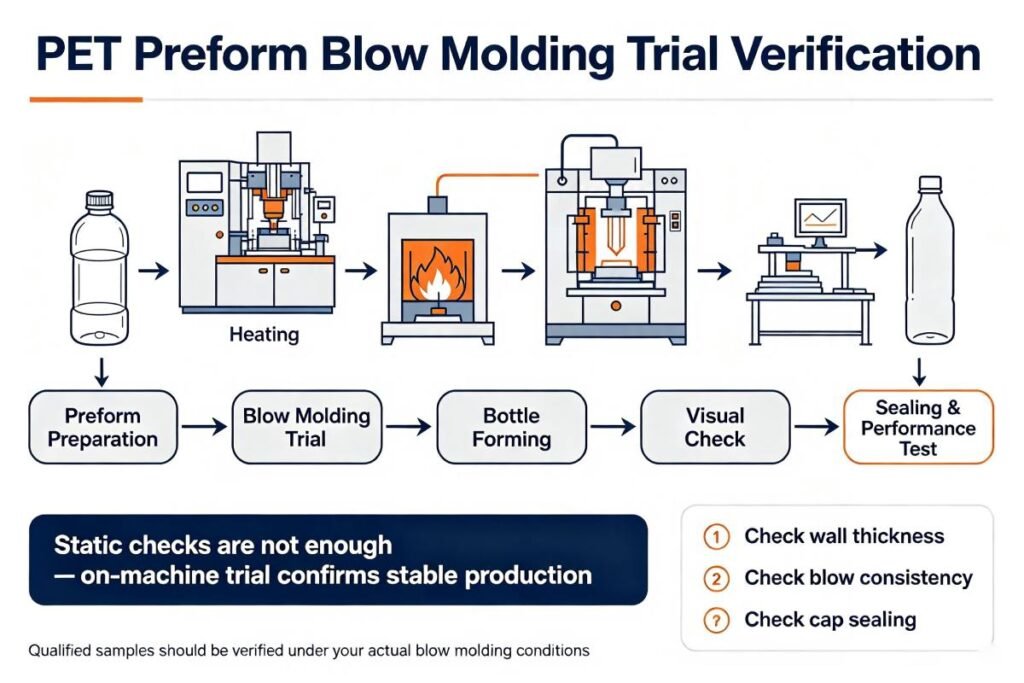
After finishing all static inspections, on‑machine blow trial is the most valuable verification step. Some samples pass all static checks but fail once loaded onto your own blow molding equipment.
• Run trial blowing with your existing process parameters
• Observe: Smooth blowing operation, even wall thickness distribution, no blow‑through, thin spots or bottom wrinkles
• After forming finished bottles, re‑inspect finished bottle appearance, volume capacity and sealing performance.
Odour & Basic Flavour Screening
This test is critical for drinking water and hot‑fill beverage packaging, where off‑flavour caused by acetaldehyde leads to frequent consumer complaints.
• Seal samples inside a clean container for a period of time, then open and smell
• If sharp plastic odour or sour smell is noticeable, communicate with your supplier about AA acetaldehyde control process, and arrange third‑party lab testing when necessary.
Documentation & Compliance Verification
Besides physical sample testing, verify supporting documents simultaneously:
• Confirm available food contact compliance papers (FDA / EU 10/2011 statements & test reports)
• Verify resin type: Virgin PET or rPET, matching your agreed specification.
Common Misunderstandings In Sample Testing
1. Testing only one single sample: Always test multiple randomly picked samples. Judging the whole batch only by one qualified sample leads to wrong risk assessment.
2. Skipping blow molding trial: Qualified static dimensions do NOT guarantee stable mass production on your blow machine.
3. Ignoring odour test: Preforms with perfect appearance can still have excessive acetaldehyde, which heavily impacts taste for water packaging.
FAQ
Q: Must I complete all these tests before ordering bulk goods?
A: You can select tests based on your end application. Full inspection is strongly recommended for drinking water and hot‑fill products. Some non‑food packaging may simplify the checklist, but neck dimension, gram weight and blow molding trial are highly recommended mandatory checks.
Q: Does minor defect found on sample mean the preform is unqualified?
A: It depends on defect type, size and occurrence ratio. Confirm with your supplier whether this defect can be steadily controlled during mass production, and clarify acceptance criteria before placing the order.
Q: What if I do not have precise measuring tools?
A: Basic electronic scale, caliper plus blow molding trial can help you avoid over 80% of major risks. High‑precision material and acetaldehyde testing can be completed by third‑party laboratories.
Q: Does sample qualification guarantee identical quality in bulk production?
A: Sample validation acts as screening threshold. You still need to write down acceptance standards and tolerance range within sales contract to lock bulk quality.
Get Your Wholesale Packaging Bottle Inquiry Solution
Tell us your requirement for capacity, color, logo printing. We will reply you within 24 working hours.