
Introduction
If you sell protein powder, herbal supplements, pre-workout, or other powdered nutrition products in HDPE jars, choosing the right cap liner is one of the most critical packaging decisions. The liner directly impacts shelf stability, moisture resistance, tamper safety, shipping performance and your production line setup.
Two dominant options for supplement packaging are induction seal liners and pressure sensitive (PS) liners. Many brand owners, importers and co-packers ask us which one fits their Australian, US and EU supplement supply chains. They are not interchangeable, and the wrong choice can lead to powder caking, spoilage, customer complaints or non-compliance at import inspection.
You can download our available mold list as below to check in-stock molds and save your tooling cost.
What Is an Induction Seal Liner?
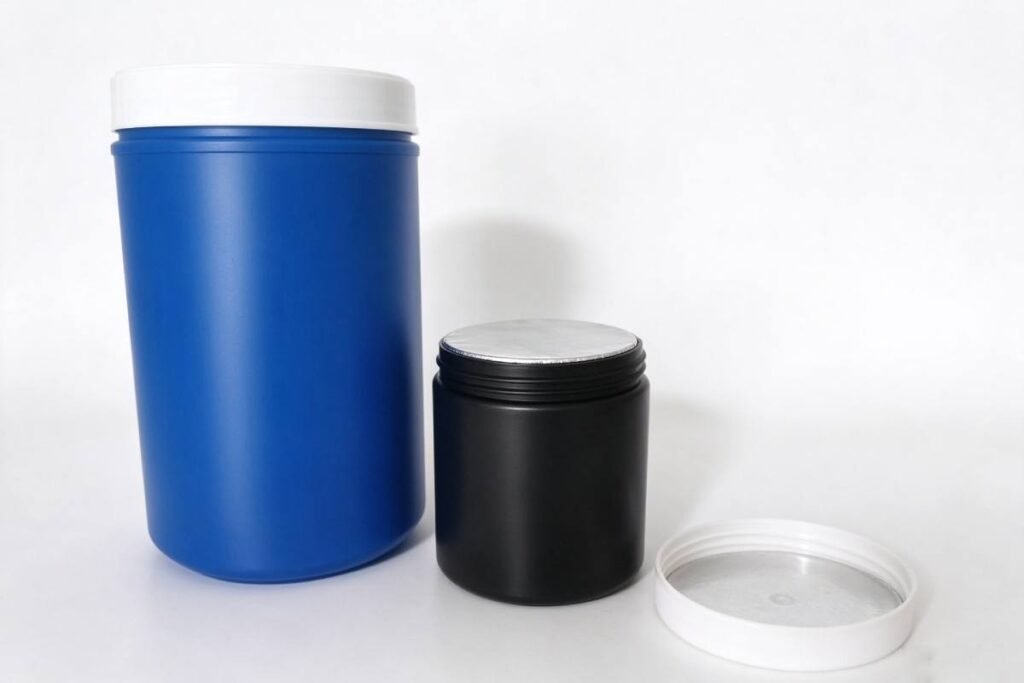
An induction liner is a multi-layer foil liner fitted inside the cap. It usually includes pulpboard, wax layer, aluminium foil and a heat-seal polymer layer.
It works with an induction sealing machine: after capping, the jar passes under an electromagnetic induction head. The foil heats up quickly, melting the polymer layer. This bonds permanently to the rim of your HDPE jar, forming a hermetic, airtight seal. Once peeled off by the end user, it cannot be reattached.
✅ Pros of Induction Seal Liner for Supplement Jars
1. Hermetic airtight barrier: Blocks moisture, oxygen and dust. This is the top benefit for hygroscopic supplements like whey protein, plant powder, creatine and herbal blends that cake easily when exposed to humidity.
2. Strong tamper-evident feature: Retail buyers and importers trust this seal, which is widely accepted for food-contact supplements in Australia, USA and many EU markets.
3. Leak and spill protection: Safe for long sea freight, rough logistics and hot warehouse storage.
4. Longer shelf life: Slows oxidation and flavour degradation of sensitive powdered nutrition products.
❌ Cons
1. Requires extra induction sealing equipment: You need to invest in an induction sealer and integrate it into your filling line.
2. Tighter process control: Cap torque, jar neck finish, line speed and temperature all need consistent setup. Poor setup causes incomplete sealing.
3. Higher unit cost than basic PS liners.
What Is a Pressure Sensitive Liner (PS Liner)?
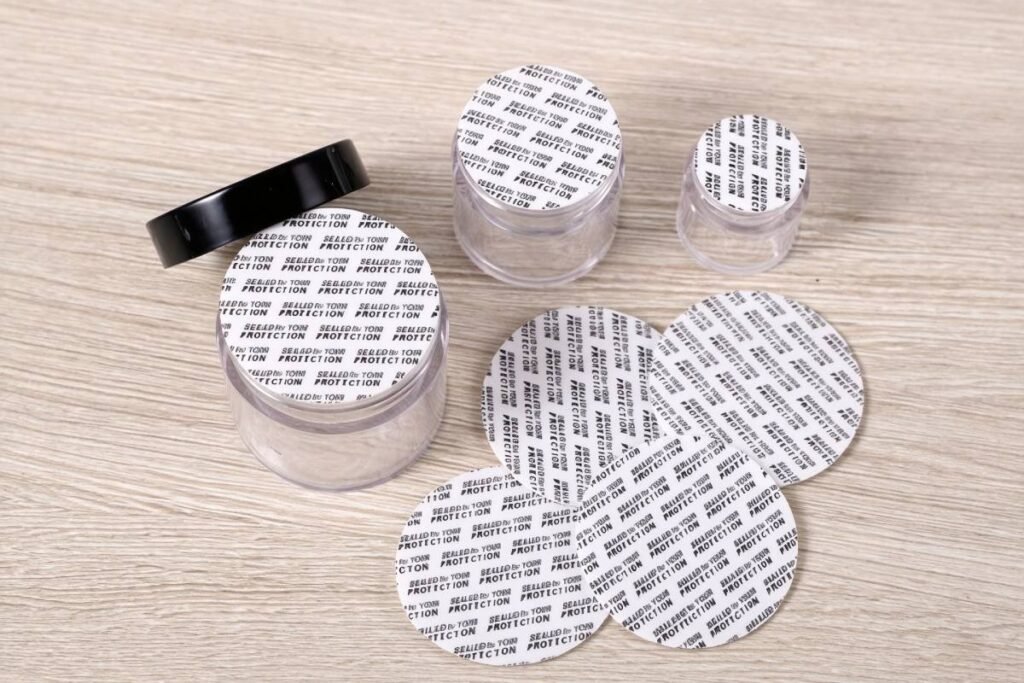
A pressure sensitive liner is a foam or pulp disc pre-coated with pressure-activated adhesive. No heat or machine is needed. When you tighten the cap firmly, the pressure activates the adhesive and sticks the liner onto the jar rim.
It is a simple, low-cost dust seal, very common for small trial runs, sample packs and low-risk dry goods.
✅ Pros of Pressure Sensitive Liner for Supplement Jars
1. No sealing machine required: Works with your existing capper only, perfect for small batches, trial orders or brands without filling automation.
2. Simple production setup: Fast to switch, ideal for short runs and test marketing.
3. Lower liner cost: Budget-friendly option for non-sensitive dry powders.
❌ Cons
1. Not hermetic: It cannot fully block moisture and oxygen. High humidity during shipping or storage will make protein powder clump and degrade faster.
2. Tamper evidence is weak: The bond can sometimes be re-stuck, so it fails the strict tamper safety expectations for mainstream supplement retail.
3. Relies heavily on consistent cap torque: Under-tightened caps lead to liner peeling and failed protection. It is less reliable for export shipments with long transit times.
4. Not suitable for liquid products or high-moisture-sensitive formulations.
Side-by-Side Comparison Table
| Item | Induction Seal Liner | Pressure Sensitive Liner |
| Sealing Type | Hermetic, airtight foil seal | Adhesive dust seal, non-hermetic |
| Equipment Needed | Induction sealer machine | None, standard capping only |
| Moisture & Oxygen Barrier | Excellent | Moderate / limited |
| Tamper Evidence | Strong, widely accepted for retail supplements | Weak, not recommended for formal retail |
| Best Transit Fit | Sea freight, long overseas export (Australia, USA) | Local short transit, samples, small trial batches |
| Suitable Products | Whey protein, creatine, herbal powder, sensitive supplements | Stable dry capsules, low-hygroscopic dry goods, test samples |
| Unit Cost | Higher | Lower |
| Shelf Life Extension | Significant | Minimal |
How to Choose for Your Supplement Business
Pick induction seal liner, if:
– You export to Australia, USA or other regulated supplement markets
– Your powder is moisture-sensitive (protein, greens, herbal extracts)
– You sell through retail channels and need reliable tamper proofing
– You ship by sea with weeks of transit and variable humidity
– You plan formal bulk production and long-term stock holding
This is our standard recommendation for most of our HDPE 1.2L protein powder jars. Our food-grade induction liners are compatible with standard induction sealing machines and supported with food contact certificates for Australian import clearance.
Pick pressure sensitive liner, if:
– You only run small trial orders, sample packs or limited test marketing
– Your formulation is stable, non-hygroscopic
– You do not have budget or space for an induction sealer
– Goods are delivered locally with fast, low-humidity logistics
Important note: Many Australian importers and supplement retailers will reject PS liners for consumer-facing protein powder jars due to moisture and tamper concerns.
Frequently Asked Questions
Q1: Can I use induction liner on HDPE jars?
Yes. HDPE is highly compatible with induction foil sealing. Our ready-mould 1.2L white HDPE jars work perfectly with matching induction caps and liners.
Q2: Can I switch from PS liner to induction liner later?
Yes, as long as your jar neck finish matches the induction cap specification. You will need to add an induction sealing machine to your filling line.
Q3: Are induction liners food safe for supplement products?
Yes. We supply food-contact induction liners, and all required test certificates will be provided before shipment for Australian import customs clearance.
Q4: Does pressure sensitive liner meet Australian food packaging rules?
PS liner itself can be food-grade, but it usually fails the practical shelf-life and tamper-evidence requirements for retail supplement products sold in Australia.
Get Your Wholesale Packaging Bottle Inquiry Solution
Tell us your requirement for capacity, color, logo printing. We will reply you within 24 working hours.