

Introduction
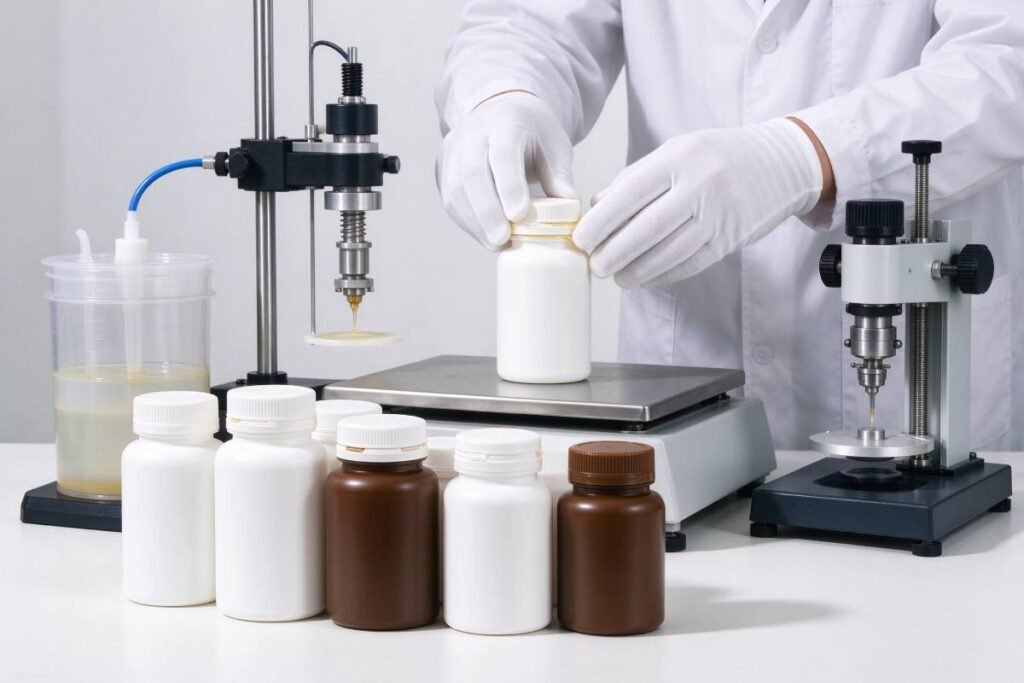
Safety bottle cap testing is a critical quality control step for supplement, pharmaceutical and health food packaging. It ensures caps are child-resistant, leak-proof and tamper-proof, protecting end users and helping brands meet global regulatory requirements. Reliable cap testing avoids safety risks, product leakage and costly compliance failures for your plastic bottle packaging orders.
You can download our available mold list as below to check in-stock molds and save your tooling cost.
What Is Safety Bottle Cap Testing?
Safety bottle cap testing covers a series of performance checks for child-resistant caps, tamper-evident caps and common screw caps. It verifies whether the cap works as designed under storage, shipping and daily use. For supplement bottles, protein powder jars and vitamin containers, this testing is mandatory for selling to North America, EU and many global markets.
Core Test Items for Safety Caps
1. Child Resistance Testing
Follow ASTM D3475 and ISO 8317 standards. Children aged 42–51 months get 5 minutes to open the cap. To pass, at least 85% of children cannot open it. Meanwhile, adults can open and reclose the cap easily.
2. Torque Testing
We test tightening torque and opening torque. Too loose causes leakage; too tight brings trouble for adult users. Stable torque performance keeps consistent sealing across mass production batches.
3. Leakage Test
Filled bottles are placed under pressure, submerged or stored in temperature-changing environments to check liquid or powder seepage. This test simulates long shipment and warehouse storage.
4. Drop Test & Vibration Test
Bottles with safety caps are dropped from set heights and run through vibration machines to simulate courier transport. We check cap cracking, loosening and tamper ring damage after the test.
5. Tamper Evidence Inspection
Check if the tamper band breaks clearly once first opened. It gives visible signs if the package has been opened before reaching customers.
Global Standards for Safety Bottle Caps
ASTM D3475 (US), 16 CFR 1700.20 (CPSC Poison Prevention Packaging), EN ISO 8317 (EU). These standards apply to dietary supplement, medicine, herb and chemical packaging. Our factory supports pre-production internal testing and third-party lab certification for your bulk orders.
Our Factory Testing Advantage
We run full safety cap testing before shipment for all supplement bottles and protein powder jars. We have ready molds for safety caps, so you can download our available mold list from the right, select existing safety cap designs and greatly reduce your tooling cost. OEM & ODM custom safety caps are also available.
FAQ
Q: Do all supplement bottles need child-resistant cap testing?
A: It depends on local regulations. Caps for vitamins, herbal supplements and potent health products usually require CR testing for US and EU sales.
Q: Can you provide safety cap test reports?
A: Yes. We can provide internal test records and arrange third-party lab test certificates upon request.
Q: Can I customize a new safety cap design?
A: Yes. Custom designs are available, while our existing safety cap molds help you save mold opening time and cost.
Get Your Wholesale Packaging Bottle Inquiry Solution
Tell us your requirement for capacity, color, logo printing. We will reply you within 24 working hours.