
Introduction
Germany enforces strict food contact material regulations under the EU framework plus national market surveillance. For plastic packaging exporters, understanding which bodies carry out checks, how products are risk-classified, common failure items and inspection rules is critical to avoid shipment detention, fines or recalls.
This article breaks down the German surveillance system and practical preparation advice for overseas suppliers.
Which Authorities Perform Inspections
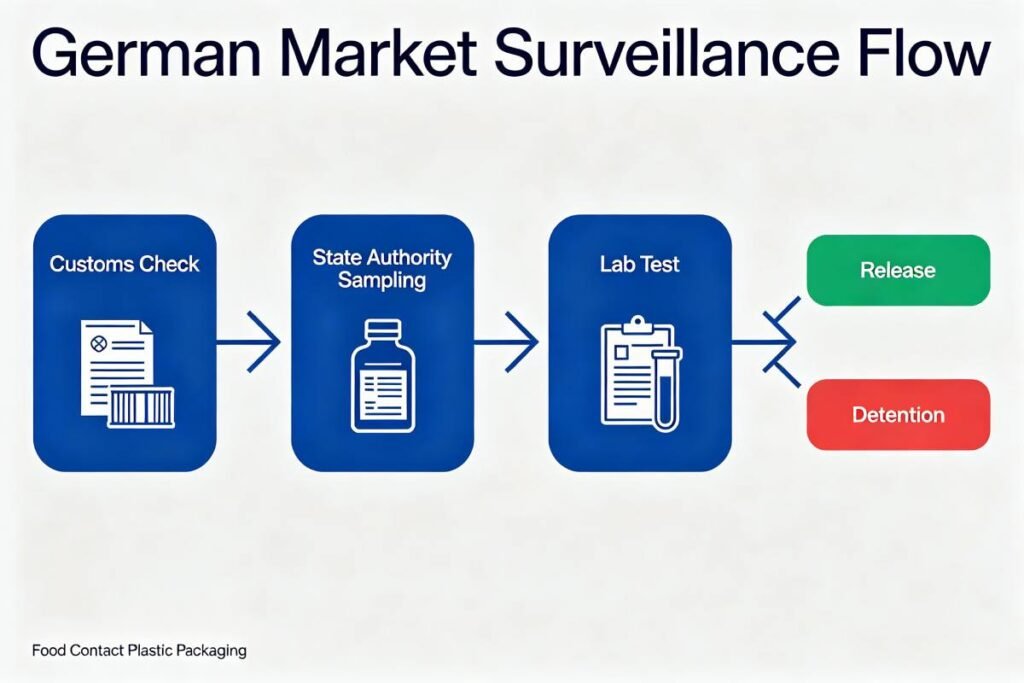
Market surveillance in Germany is mainly handled by state-level food and consumer protection authorities (Länderbehörden), not a single central federal agency. The Federal Office of Consumer Protection and Food Safety (BVL) coordinates nationwide surveillance plans and risk exchange between states.
Customs can also carry out documentary checks at the border. Customs will forward suspicious consignments to the competent state authority for sampling and laboratory testing. Importers and brand owners are the responsible parties under German market surveillance rules.
Risk Ranking for Imported Packaging
German authorities use risk-based sampling. High-risk items get much higher inspection frequency. Risk factors include: plastic type, intended use (hot filling, fatty food, long shelf life), country of origin, previous non-compliance records, and whether the packaging touches food directly.
High-risk categories: multi-layer plastic, recycled plastic packaging, packaging for hot / fatty food, squeeze bottles and jars for sauces and oil. Low-risk items still can be selected randomly in routine surveillance programs.
Most Frequent Failures
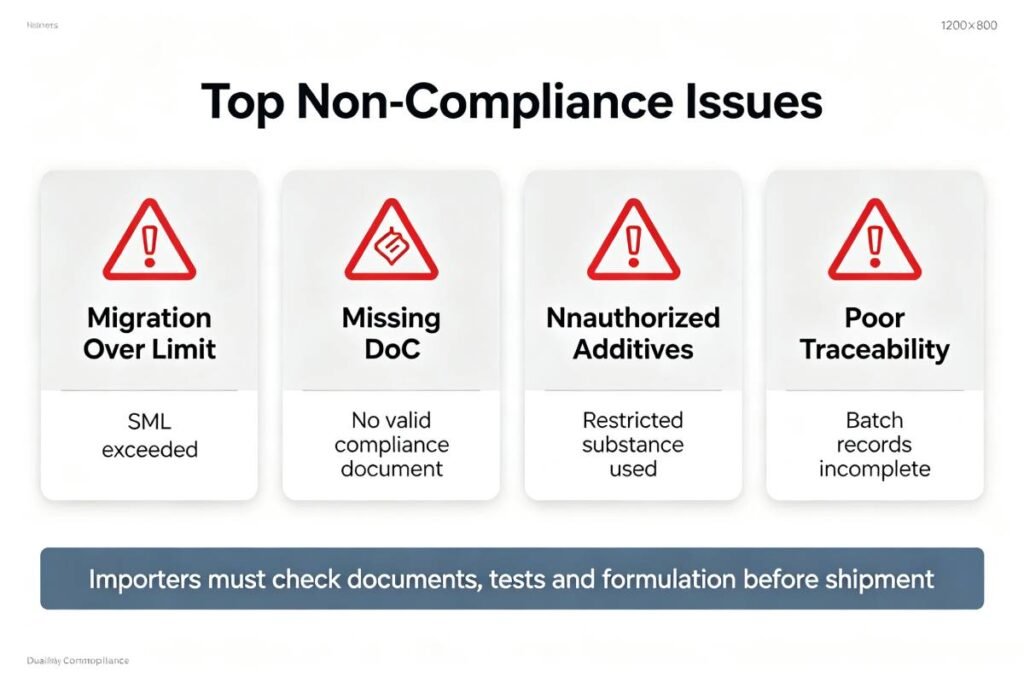
The most common non-compliance findings in German surveillance include migration limits exceeding SML (specific migration limits), missing or incomplete declaration of compliance (DoC), incorrect plastic formulation, unauthorized additives, and poor traceability records.
Other frequent issues: insufficient supporting test reports, test conditions not matching real food contact scenarios, and incorrect labelling for food contact materials. These findings can trigger detention even before the goods reach warehouse.
How Importers Prepare for an Inspection
Importers should keep full traceability documents: Declaration of Compliance (DoC), valid test reports, material formulation records, supplier information and batch records. Test conditions must match the actual intended food, temperature and contact duration.
Work with suppliers to confirm raw material compliance, avoid unknown recycled feedstock without full validation. Prepare all documents in German or English. Set internal controls so you can quickly respond to official sampling requests and information queries.
FAQ
Are German inspections stricter than other EU countries?
Germany follows the same EU harmonized food contact framework, but its market surveillance is known for frequent, well-organized sampling and rigorous laboratory enforcement. Many German states run regular multi-year surveillance projects targeting imported plastic packaging, so exporters often perceive German checks as stricter than some other EU member states.
Can a failed inspection lead to EU wide recall?
Yes. If the non-compliance creates a health risk and the product is distributed across multiple EU countries, German authorities can issue a rapid alert via RAPEX. This can trigger cross-border market withdrawal or EU-wide recall, not only limited to Germany.
Get Your Wholesale Packaging Bottle Inquiry Solution
Tell us your requirement for capacity, color, logo printing. We will reply you within 24 working hours.