

Introduction
If you are sourcing plastic bottles for oral liquids, herbal tinctures, nutritional supplements, or pet health products for the UK and EU markets, child resistant cap compliance is no longer an optional extra—it is a mandatory regulatory requirement for many product categories.
Child resistant packaging is designed to reduce the risk of accidental ingestion by children while remaining accessible to adults. For brands, private label sellers, contract packers, and distributors operating in the UK and EU, choosing certified child resistant cap bottles helps protect product safety, reduce compliance risk, and support smoother access to pharmacies, supermarkets, e-commerce platforms, and retail channels.
This guide explains the key requirements, standard configurations, compliance documents, and typical applications for child resistant cap bottles used in the UK and EU markets.
Why Child Resistant Cap Bottles Are Required in the UK and EU
The EU and UK maintain strict packaging safety rules for certain oral liquids, medicinal products, food supplements, herbal preparations, and high-concentration nutritional liquids. While exact classification depends on product formulation, dosage, and intended use, child resistant packaging is widely required or strongly recommended for products that present a risk to children.
Key regulatory points include:
- Products classified as hazardous or as requiring special protection may not be placed on the market with ordinary screw caps.
- Many oral liquids, tinctures, and concentrated nutritional products must use child resistant packaging to meet safety expectations.
- Reclosable child resistant caps are commonly required to meet performance standards such as ISO 8317 and EN 14375.
- Non-compliant packaging may result in product withdrawal, retailer rejection, customs scrutiny, or market surveillance action.
Unlike standard caps, child resistant caps use a push-down-and-turn mechanism. This design makes independent opening more difficult for children while allowing adults to open the bottle with a simple two-step action. For this reason, child resistant cap bottles have become a standard safety requirement across the UK, EU, and many Western markets.
Standard Construction for UK/EU-Compliant Child Resistant Bottles
A compliant child resistant bottle for the UK and EU market typically includes three integrated elements: the bottle body, the child resistant cap, and the sealing system.
Bottle Body
The bottle body is usually selected based on product sensitivity, shelf life, logistics requirements, and brand positioning.
Common options include:
- Amber PET bottles: lightweight, shatter-resistant, low-cost, and suitable for shipping.
- Amber glass bottles: higher chemical resistance, premium presentation, and often used in pharmacy or premium product lines.
- Light-protective amber colour: helps reduce UV exposure for light-sensitive liquids such as vitamins, tinctures, probiotics, and oral supplements.
- Food-contact-grade material: required or expected for food supplements, oral liquids, and similar consumer products.
From a commercial perspective, PET is often the first choice for cross-border e-commerce and high-volume logistics, while glass is preferred by brands targeting pharmacy, premium, or retail channels.
Child Resistant Cap
The cap is the most critical compliance component. In the UK and EU markets, the most widely accepted design for oral liquids is the push-down-and-turn child resistant screw cap.
Standard features include:
- Push-down-and-turn unlocking mechanism
- Child resistant performance testing to recognised standards
- Tamper-evident options for added supply-chain security
- Ribbed or textured surfaces for adult grip
- Compatibility with automated filling and capping lines
A good child resistant cap must balance two requirements: it must be difficult for children to open, but easy enough for adults to use repeatedly.
Sealing and Dosing Accessories
Many oral liquid products also require additional sealing or dosing components.
Common combinations include:
- Inner seals or liners for leak prevention
- Tamper-evident bands over the cap and neck
- Oral syringes for accurate dosage
- Dropper inserts for tinctures and concentrated liquids
- Adapter plugs that fit syringe tips
For UK and EU buyers, a complete bottle-and-cap system is often more valuable than sourcing individual components from different suppliers.
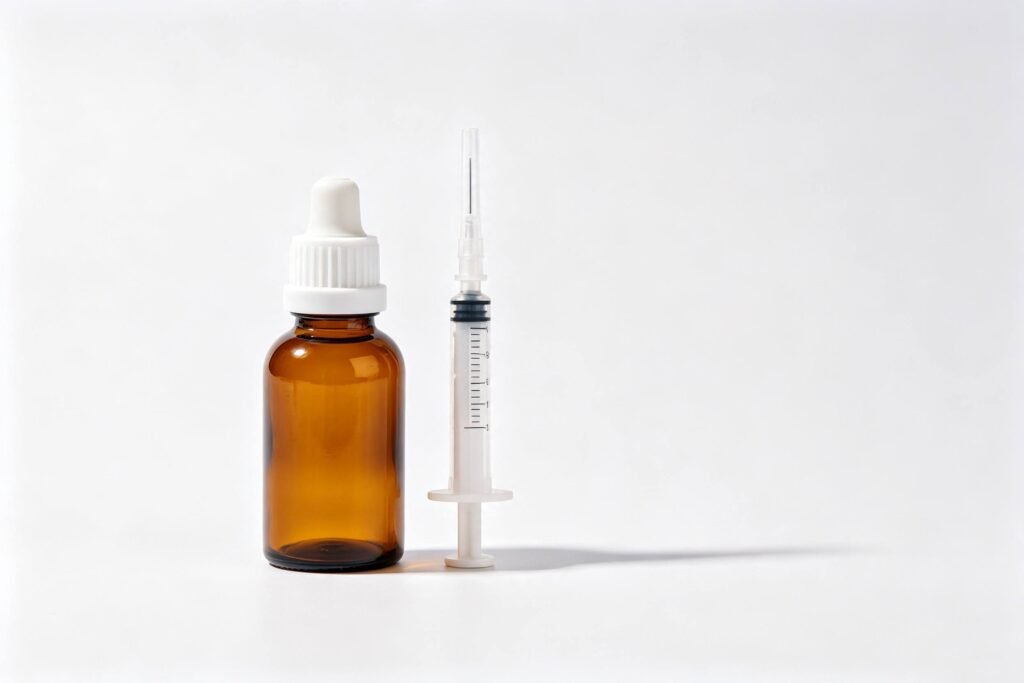
Recommended Configuration: Child Resistant Cap Bottle with Oral Syringe
One of the most popular configurations for the UK and EU market is a child resistant cap bottle combined with an oral syringe. This combination is especially suitable for oral liquids, nutritional supplements, herbal tinctures, and pet vitamins.
Typical features:
- Round amber bottle body
- Food-grade PET or glass option
- White child resistant screw cap
- Press-in neck adapter for syringe tip
- 3 ml oral syringe with 0.1 ml increments
- Light-protective amber finish
- Compatible with food contact and regulatory documentation requirements
This type of system is often requested by brands that need both child safety and accurate dosing. It is also commonly used in products where dosage precision is important, such as children’s supplements, animal health liquids, and concentrated herbal extracts.
Compliance Documents Buyers Usually Require
When sourcing child resistant cap bottles for the UK and EU, buyers should request more than just product samples. Suppliers should be able to provide documentary evidence of compliance.
Common required documents include:
- ISO 8317: standard for child resistant packaging
- EN 14375: standard for child resistant packaging for medicinal products
- EU 10/2011: regulation on plastic materials and articles intended to come into contact with food
- FDA food contact statements or relevant food-contact documentation
- Batch test reports or material certificates
- Declaration of Conformity (DoC)
- Factory and quality management information
It is important to note that compliance documentation should match the actual product configuration, including the bottle, cap, liner, and any dosing accessories.
Suitable Product Categories
Child resistant cap bottles are used across many categories in the UK and EU. Typical applications include:
- Herbal tinctures and extracts
- Liquid food supplements
- Probiotic and prebiotic liquids
- Vitamin and mineral oral liquids
- Pet vitamins and pet health supplements
- Home health liquids and oral remedies
- E-commerce private label products
- Pharmacy and retail packaged products
Because different product categories may have different classification rules, buyers should always confirm the exact regulatory requirements for their finished product.
Wholesale Advantages of a Standardised Child Resistant Bottle System
Working with a standardised child resistant bottle system offers several practical benefits for importers and brand owners.
Faster Market Entry
Standard bottle and cap configurations are more likely to already have existing test data and documentation, which can reduce lead time compared with fully custom packaging.
Lower Logistics Risk
Lightweight amber PET bottles reduce shipping costs and lower breakage risk during ocean freight, which is especially important for cross-border e-commerce brands.
Better Production Compatibility
Child resistant caps with standard neck finishes are often compatible with standard filling and capping equipment, making them easier for contract packers and manufacturers to adopt.
One-Source Supply
Suppliers that can provide the bottle, cap, seal, oral syringe, and related accessories in one system reduce sourcing complexity and improve consistency across the packaging chain.
How to Select the Right Child Resistant Cap Bottle
When selecting a child resistant bottle for the UK and EU market, buyers should evaluate more than price alone.
Key purchasing factors:
- Product category and regulatory classification
- Required child resistant standard
- Bottle material: PET or glass
- Light sensitivity of the liquid
- Viscosity and fill volume
- Need for oral syringes or dosing devices
- Tamper-evident requirements
- Production volume and lead time
- Documentation support from the supplier
For most e-commerce and mid-volume brands, amber PET + push-down-and-turn child resistant cap + oral syringe is a practical starting configuration.
Frequently Asked Questions
Q1: Are child resistant cap bottles accepted throughout the UK and EU?
A child resistant cap bottle that meets recognised standards such as ISO 8317 or EN 14375 is generally accepted across the UK and EU, but final compliance always depends on the finished product, its classification, and the applicable national or EU rules.
Q2: What is the difference between ISO 8317 and EN 14375?
ISO 8317 is an international standard for child resistant reclosable packaging. EN 14375 is a European standard specifically for child resistant packaging for medicinal products. EN 14375 is often referenced in the pharmaceutical and healthcare sector.
Q3: Can I use a normal cap instead of a child resistant cap?
Only if your product is not subject to child resistant packaging requirements. For many oral liquids, herbal preparations, and concentrated supplements sold in the UK and EU, a normal cap may not meet safety or regulatory expectations.
Q4: Is amber colour mandatory?
Amber colour is not always legally mandatory, but it is highly common for light-sensitive liquids. Many buyers in the UK and EU prefer amber bottles for vitamins, tinctures, probiotics, and oral liquids.
Q5: Can child resistant caps be used with automated filling lines?
Yes. Standard child resistant screw caps can usually be adapted to automated capping equipment, but the exact compatibility depends on the bottle neck finish, cap design, and machine settings.
Q6: What documentation should I ask my supplier for?
You should ask for child resistant test standards, food contact documents, material certificates, batch reports, and a Declaration of Conformity where applicable.
Get Your Wholesale Packaging Bottle Inquiry Solution
Tell us your requirement for capacity, color, logo printing. We will reply you within 24 working hours.